
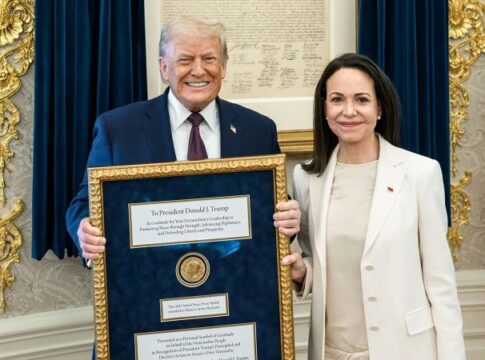

Venezuelan opposition leader María Corina Machado’s decision to present her Nobel Peace Prize medal to President Trump has sparked debate about the role of personal flattery in serious foreign policy decisions.
**Quick Take**
• Venezuelan opposition leader transfers Nobel Peace Prize medal to Trump despite committee rules against transferability
• Decision comes after Trump’s military intervention in Venezuela but refusal to endorse Machado as Maduro’s replacement
• Critics question whether foreign policy decisions are being influenced through personal gestures and flattery
• Machado risked her life for democracy work that earned the prestigious award just three months ago
• The exchange highlights potential risks when diplomatic relationships center on personal recognition
**Military Action Precedes Medal Transfer**
The medal presentation follows a complex sequence of events involving U.S. military intervention in Venezuela. Trump launched a brief mission on January 3 to remove Nicolás Maduro from power, fulfilling Machado’s earlier requests for American assistance. However, Trump disappointed Venezuelan democracy advocates by refusing to endorse Machado as Venezuela’s next leader, stating she lacked sufficient domestic support.
**Strategic Lobbying Campaign Pays Off**
Machado began her public courtship of Trump after winning the Nobel Peace Prize in October 2025, immediately dedicating the award to the American president. She explicitly praised Trump’s role in reshaping Venezuela’s government and positioned him as a crucial ally for achieving Venezuelan freedom and democracy. This dedication came after Trump’s unsuccessful campaign to secure his own Nobel Prize recognition.
**Personal Gestures Meet Policy Implications**
The medal transfer appeared on Fox News host Sean Hannity’s program, where Machado confirmed her intention to present the award to Trump. The Nobel Committee has stated clearly that Peace Prize medals cannot be transferred between recipients, making the gesture symbolic rather than official. Trump’s acceptance demonstrates his continued pursuit of international recognition through unconventional diplomatic channels.
**Foreign Policy Through Flattery Concerns**
Analysts express concern that significant international decisions may be influenced by personal appeals rather than strategic national interests. Machado’s willingness to surrender an award she earned through life-threatening democracy advocacy work illustrates the lengths foreign leaders may go to maintain Trump’s support. The dynamic raises questions about whether American foreign policy becomes transactional when based on personal gestures and recognition.
**Constitutional Principles at Stake**
The situation underscores fundamental questions about executive decision-making processes in foreign affairs. While presidents possess constitutional authority over foreign policy, the apparent influence of personal flattery on military interventions and diplomatic relationships warrants scrutiny. American taxpayers and constitutional conservatives deserve transparency about factors driving international engagement decisions, particularly those involving military action and resource allocation.