
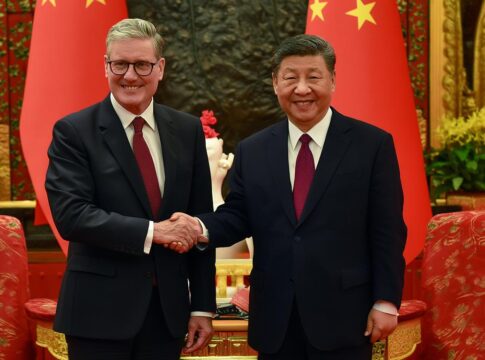
China announced visa-free travel privileges for British citizens following Prime Minister Keir Starmer’s historic visit to Beijing, marking the first time a British leader has visited China in eight years.
New Travel Agreement Emerges
The Chinese government granted British passport holders the ability to visit China without obtaining a visa for stays of up to 30 days. This development came after Starmer’s Thursday meeting with Chinese President Xi Jinping, representing a significant shift in diplomatic relations between the two nations. The British government has not announced when this agreement will take effect, though officials expressed hope for rapid implementation.
Lmao China is going to be flooded by Muslims now https://t.co/nrRYYmMFgD
— DAKKADAKKA (@DAKKADAKKA1) January 29, 2026
Approximately 620,000 British citizens traveled to China in 2024, according to the Office for National Statistics, suggesting hundreds of thousands could benefit from this new arrangement. The visa exemption places Britain alongside 50 other countries, including France, Germany, Italy, Australia, and Japan, that already enjoy similar privileges with China.
Economic Benefits Beyond Tourism
The diplomatic breakthrough extended beyond travel convenience to include trade concessions. China agreed to reduce import taxes on British whisky from 10 percent to 5 percent, providing a direct boost to Scottish distilleries and exporters. Starmer emphasized how these changes would help British businesses expand their operations in China, one of the world’s largest consumer markets.
The Chinese Primer Minister had to physically drag Keir Starmer to the inside of the red carpet.
He’s such an international embarrassment. 😂 pic.twitter.com/cewIU1y3GS
— Chris Rose (@ArchRose90) January 29, 2026
Strategic Implications for Trade Relations
British officials view these agreements as part of broader efforts to strengthen economic ties with China while maintaining strategic independence. Starmer stated that relaxed visa rules would support business expansion abroad while boosting growth and employment opportunities domestically. The Prime Minister characterized China as an economic powerhouse where businesses have long sought greater access and operational flexibility. These developments represent a pragmatic approach to China relations, focusing on economic benefits rather than broader geopolitical considerations that have complicated Western-China relations in recent years.