
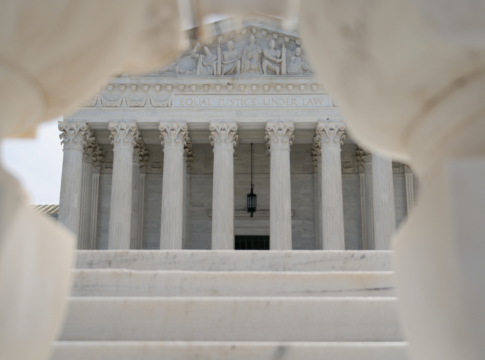
The U.S. Supreme Court rejected Michigan Governor Gretchen Whitmer’s appeal to reclaim control over state lands currently occupied by a Canadian energy company’s oil and gas pipeline, leaving a federal court battle to continue without the state’s consent.
High Court Refuses to Intervene
The Supreme Court declined Monday to hear Whitmer v. Enbridge Energy, a case challenging whether federal courts can force Michigan to allow a Canada-based company’s pipeline to run through state-owned public lands. The Sixth Circuit Court of Appeals previously ruled that Enbridge Energy’s lawsuit against Michigan could proceed in federal court, even though the state revoked the company’s access to the land. Whitmer’s legal team argued this violated Michigan’s sovereign immunity, the constitutional principle protecting states from being sued without their consent.
Governor Whitmer contends Michigan has the constitutional right to decide how its public lands are used and should be permitted to terminate Enbridge’s pipeline access. Her attorneys argued the Sixth Circuit adopted an improper legal standard, claiming sovereign immunity should protect the state from federal lawsuits unless the requested relief would completely eliminate Michigan’s ownership and regulatory authority over the lands. The denial marks a significant setback for states seeking to assert control over their own property against federal court intervention.
Enbridge Challenges Termination Process
Enbridge Energy’s legal team countered that Whitmer failed to follow proper procedures when revoking the company’s land access. The company argues it seeks only to ensure Michigan’s regulatory actions comply with federal law and constitutional requirements. The pipeline represents a substantial investment by the Canadian energy firm, which maintains operations across the border. Enbridge attorneys emphasized their lawsuit aims to bring state policies into alignment with federal standards rather than strip Michigan of land ownership entirely.
What This Means for States’ Rights
The Supreme Court’s refusal to hear the case allows the lower court ruling to stand, meaning the federal lawsuit against Michigan continues. Legal experts note the high court’s denial reveals little about the justices’ views on the underlying constitutional questions, as the Court declines most cases presented for review. However, the decision leaves unresolved tensions between state sovereignty over public lands and federal court jurisdiction. The outcome carries implications for other states facing similar disputes with energy companies operating pipelines or infrastructure across state-owned property, potentially limiting states’ ability to revoke access once granted.