
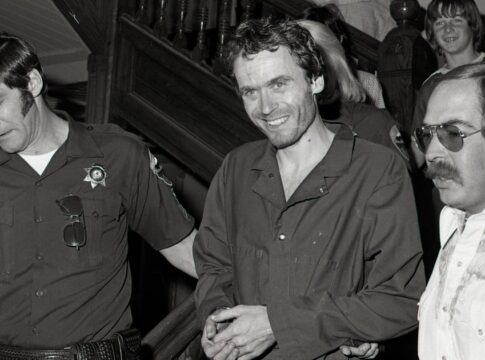
DNA evidence has conclusively linked serial killer Ted Bundy to the 1974 murder of 17-year-old Melissa Ann Smith, solving a cold case that remained unsolved for decades. Summit County authorities confirmed the breakthrough demonstrates how preserved evidence continues to identify victims of one of America’s most notorious murderers, more than three decades after his execution.
DNA Evidence Closes 50-Year Investigation
Summit County Attorney Margaret Olson announced investigators have definitively determined Bundy killed Melissa Ann Smith, a high school senior who disappeared in October 1974. Utah County Sergeant Mike Reynolds revealed that a highly similar DNA profile matching Bundy was recovered from evidence collected during Smith’s autopsy. Beyond the genetic match, Smith’s death displayed the distinctive pattern, motive, means and opportunity characteristic of Bundy’s documented crimes across multiple states.
Deer hunters discovered Smith’s bludgeoned body shortly after her disappearance near Salt Lake City. The teenager vanished at the end of October 1974, just weeks after 16-year-old cheerleader Nancy Wilcox disappeared on October 2nd. Wilcox was believed to be among Bundy’s first Utah victims after he relocated to Salt Lake City in September 1974 from Washington state, where young women had been disappearing throughout the year.


Preserved Evidence Proves Critical
Salt Lake County Sheriff Rosie Rivera emphasized the case highlights why maintaining physical evidence from unsolved crimes remains essential for future investigations. Advances in DNA technology have allowed forensic scientists to extract genetic profiles from decades-old biological samples that were impossible to analyze when originally collected. Authorities have notified Smith’s next of kin, none of whom currently reside in the area where the murder occurred.
Sergeant Reynolds expressed hope that each solved case diminishes Bundy’s legacy. The serial killer was executed by electric chair in Florida in 1989 for murdering two women at the Chi Omega sorority house at Florida State University in 1978. Before his execution, Bundy provided confessions to multiple crimes, including some previously unknown to law enforcement, though not all have been verified through evidence.
Nationwide Terror Campaign
Bundy killed at least 30 women and girls across multiple states during the 1970s, with additional victims surviving his attacks with serious injuries. His murders in sorority houses, parks and other locations created widespread fear nationwide. The case drew extraordinary public attention partly because many people found Bundy charming and handsome, contradicting expectations about serial killers. By 1974, young women, particularly college students, began vanishing in Washington state before Bundy expanded his killing spree to Utah, Idaho and Colorado. Authorities continue investigating when his attacks actually began.