
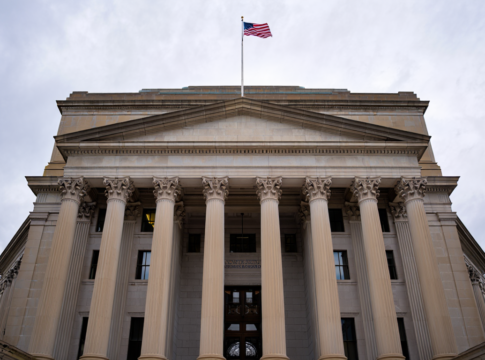
A federal appeals court rejected the Trump administration’s request to delay processing billions of dollars in tariff refunds, forcing the government to move forward with returning money collected under tariffs the Supreme Court ruled illegal last month.
Court Pushes Forward Despite Government Resistance
The U.S. Court of Appeals for the Federal Circuit denied the Justice Department’s Friday filing that sought a 90-day pause before proceeding with refunds. The court immediately transferred the case to the U.S. Court of International Trade in New York to determine how importers will receive their money back. The Supreme Court’s February 20th ruling declared Trump’s sweeping global tariffs illegal but provided no instructions on the refund process, leaving lower courts to establish procedures.
The government collected more than 130 billion dollars from the tariffs by mid-December, according to official figures. Penn Wharton Budget Model calculations indicate total refunds could reach 175 billion dollars. Trade lawyer Ryan Majerus, a King and Spalding partner and former U.S. trade official, expects the Court of International Trade to demand immediate status updates from the government on refund plans and take an aggressive stance requiring justification for compliance with the Supreme Court ruling.
Treasury Faces Massive Payment Challenge
The administration faces significant logistical challenges in paying these refunds. Siddartha Rao, a partner at law firm Hoguet Newman Regal and Kenney, noted his firm receives numerous client inquiries about the process. He emphasized that the government lacks a reserve fund containing over 100 billion dollars ready for immediate refund distribution, creating a Treasury Department problem requiring immediate solutions.
New Tariffs May Fund Court-Ordered Refunds
The Trump administration has been implementing new tariffs to replace those struck down by the Supreme Court. Rao suggested the government’s push for replacement tariffs serves dual purposes beyond stated strategic trade goals and bargaining power. The administration may need new tariff revenue specifically to fund the court-ordered refunds to importers who paid the illegal tariffs. This approach would effectively use new collections to cover past obligations, though the legal and practical implications remain under scrutiny as courts establish refund procedures.
Sources
Associated Press: Federal court rejects Trump administration attempt to slow tariff refund process