
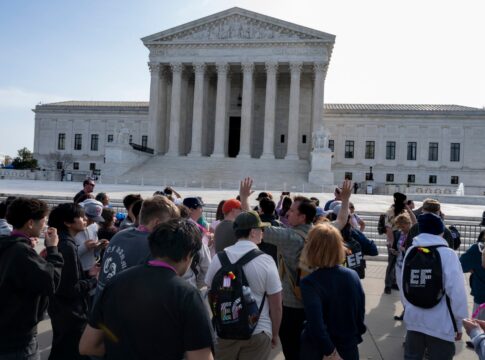
The Supreme Court convened on Wednesday to decide whether President Donald Trump can restrict birthright citizenship through executive order, testing constitutional limits in a case that could reshape American immigration law for generations.
Constitutional Challenge Takes Center Stage
The case, Trump v Barbara, challenges an executive order signed by President Trump on January 20, 2025, just hours after taking office. The order sought to end the longstanding interpretation of the 14th Amendment that grants automatic citizenship to anyone born on American soil, regardless of their parents’ immigration status. Trump’s directive argued the amendment’s phrase “subject to the jurisdiction thereof” excludes children born to undocumented immigrants or those on temporary visas.
Lower courts universally blocked the order’s enforcement. Aarti Kohli, executive director of the Asian Law Caucus, emphasized the stakes: “Every judge in the lower courts, regardless of which party appointed that judge, has ruled in our favor.” The plaintiffs include a Honduran asylum seeker in New Hampshire, a Taiwanese student in Utah, and a Brazilian national, all whose children face citizenship denial under the executive action.
Historic Amendment Under Scrutiny
The 14th Amendment, ratified in 1868, established citizenship rights following the Civil War. It overturned the 1857 Dred Scott decision that denied citizenship to enslaved people born in America. For over 150 years, courts have interpreted the amendment to guarantee birthright citizenship automatically. Advocates argue Trump’s order represents presidential overreach, attempting to rewrite constitutional text without going through the amendment process outlined in the Constitution itself.
What Hangs in the Balance
The Supreme Court’s conservative supermajority holds the deciding vote. While the court recently handed Trump several defeats, it has generally favored his administration on immigration matters. Legal experts representing the challengers, including the ACLU and Legal Defense Fund, plan to argue the 14th Amendment’s language is unambiguous. A ruling in Trump’s favor could create what advocates warn would be a “permanent underclass” of people born in America but denied citizenship rights. The decision affects not just the named plaintiffs but all future children born to immigrant parents in similar circumstances, fundamentally altering who qualifies as an American citizen.