
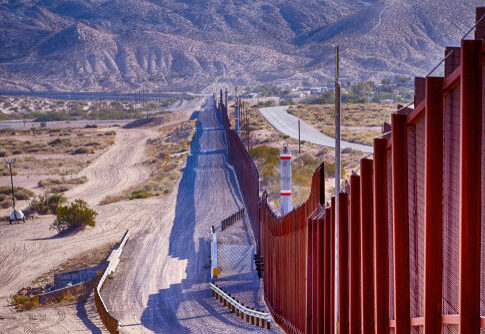
As Kristi Noem fast-tracks new border walls and river barriers by waiving long-standing federal protections, conservatives face a pivotal test of how far executive power should go in securing the border without eroding the rule of law.
Noem’s Border Blitz: How the Waiver Power Became Her Sharpest Tool
As President Trump’s second administration pushes to finally secure the southern border, Homeland Security Secretary Kristi Noem has turned a little-known legal weapon into her primary tool: a broad waiver authority created by Congress in 2005. Using that power, she has suspended dozens of federal laws at a time so crews can push more wall, access roads, lighting, surveillance towers, and even floating river barriers into place along key stretches of the California and Texas border.
In Southern California, Noem approved waivers to speed new physical barriers and roads near San Diego, despite illegal crossings in that sector recently hitting historic lows. Critics insist this proves the administration is chasing a political symbol more than an operational need, but supporters argue the lull is fragile and the wall is exactly why numbers are falling. They see these projects as a long-term investment in deterrence, closing gaps that cartels and smugglers have exploited for decades.
From San Diego to Laredo: Walls, Water Barriers, and the Clash Over Local Impacts
Farther east, Noem’s December waiver for the Laredo sector greenlit roughly 115 miles of new steel barriers along the Rio Grande, paired with all-weather roads, lights, and high-tech monitoring. For many Texans exhausted by cartel violence and human smuggling, this is welcome backup after years of Washington neglect. Yet local landowners, tribal representatives, and environmental advocates warn that accelerating construction without full review risks property disputes, habitat fragmentation, and cultural damage that will be nearly impossible to undo later.
Noem’s January announcement in Brownsville added another controversial layer: more than 500 miles of floating buoy “water barriers” to block illegal crossings through rivers and channels. Supporters hear that and think of the countless Americans harmed by drugs and trafficking pipelines that run through these waterways. Opponents, however, see a militarized river system that could alter water flow, trap wildlife, and drive migrants into even more remote, deadly terrain. That split captures a core tension: physical deterrence versus unintended humanitarian and environmental fallout.
Executive Power vs. Conservative Principles: Where to Draw the Line?
The deeper question for constitutional conservatives is not whether the border must be secured—it must—but how far a single cabinet secretary should go in sweeping aside existing law to get there. The Real ID–era waiver authority lets DHS bypass cornerstone statutes like the Endangered Species Act and Native American Graves Protection and Repatriation Act whenever it declares border infrastructure an “acute and immediate” necessity. Courts have mostly upheld this power, leaving very little formal oversight once the secretary signs the order.
For readers who lived through the Biden years of open-border chaos, fentanyl deaths, and overwhelmed communities, it is tempting to say any tool that finally clamps down is automatically justified. Yet the same concentrated power used today for wall and water barriers could, under a future left-wing administration, be pointed in very different directions—say, fast-tracking surveillance systems, land seizures, or dubious “climate” projects over the objections of ranchers, gun owners, and rural towns. That is why the precedent itself deserves careful scrutiny from a limited-government perspective.
Who’s Pushing Back—and What It Means for Border Communities
Opposition to Noem’s waivers is led by environmental organizations, migrant-advocacy groups, and tribal communities with deep roots along the border. They argue that skipping environmental review hides the true cost to sensitive ecosystems and wildlife corridors, that sacred sites and burial grounds could be disturbed without meaningful consultation, and that pushing illegal crossings into harsher desert and mountain routes increases injuries and deaths. Their legal options are narrow, so they lean on public campaigns to challenge the administration’s narrative.
Border residents themselves are caught in the middle. Many are grateful for finally seeing Washington treat their security concerns as urgent after years of feeling like collateral damage in a globalist experiment. At the same time, they live with construction noise, rerouted access roads, and the risk of eminent domain on family land. For conservatives, the challenge is to insist on a secure, sovereign border while still demanding transparency, respect for property rights, and real accountability whenever Washington uses extraordinary powers in their backyards.
Sources:
Homeland Security waives environmental laws to fast-track more border wall in San Diego area
Homeland Security waives 26 laws to fast-track 115-mile border wall in Laredo sector
Border wall waivers risk harm for border communities and environment