
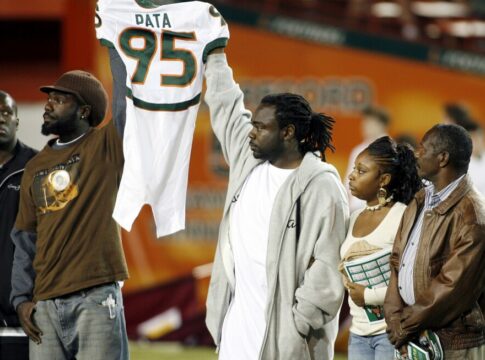
A Miami courtroom delivered no resolution as jurors failed to reach a unanimous verdict in the murder trial of Rashaun Jones, accused of killing University of Miami teammate Bryan Pata nearly 20 years ago, leaving the victim’s family without the closure they desperately sought.
Jury Deadlock Ends Murder Trial
Circuit Court Judge Cristina Miranda declared a mistrial after jurors could not unanimously decide whether former Miami Hurricanes football player Rashaun Jones killed his teammate Bryan Pata in 2006. Court proceedings will continue, and prosecutors may pursue another trial. Jones faces second-degree murder charges filed in 2021, fifteen years after Pata’s death outside his apartment on November 7, 2006. The promising defensive lineman was shot and killed just hours after finishing practice with the Hurricanes, cutting short what appeared to be a promising NFL career.
The Pata family expressed frustration following the mistrial declaration. Edwin Pata, Bryan’s brother, spoke outside the courtroom about the family’s ongoing pain. The family has waited nearly two decades for justice, attending court proceedings while keeping Bryan’s memory alive. Edwin emphasized the family’s determination to continue seeking answers despite Monday’s disappointing outcome, noting the particular difficulty for their mother and siblings who have supported the case throughout the lengthy legal process.
Defense Claims Circumstantial Evidence
Jones’ defense attorneys have consistently maintained their client’s innocence throughout the proceedings. The defense team argues that prosecutors built their case primarily on circumstantial evidence without direct proof linking Jones to the shooting. This reliance on indirect evidence may have contributed to the jury’s inability to reach a unanimous decision. The case highlights the challenges prosecutors face when pursuing decades-old homicides where physical evidence and witness memories have degraded over time.
What This Means for Justice
The mistrial leaves prosecutors with difficult decisions about whether to retry the case. A second trial would require the state to present its evidence again to a new jury, consuming additional time and resources while forcing the Pata family to relive their loss. However, abandoning the prosecution would mean no accountability for Bryan Pata’s death. The case demonstrates how cold cases present unique challenges for the justice system, particularly when witnesses have scattered and memories have faded over nearly two decades. The Pata family’s pursuit of closure continues as they await the court’s next steps.
Sources
Associated Press: Judge declares a mistrial in Rashaun Jones trial over Bryan Pata’s 2006 killing