
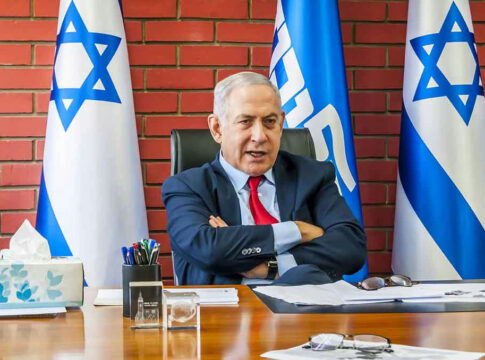
The real drama in New York politics now hinges on a single dare: will a mayor-elect obsessed with international justice actually try to arrest a visiting Israeli prime minister who insists he is coming anyway?
Netanyahu’s calculated dare to New York
Benjamin Netanyahu did not merely shrug off Zohran Mamdani’s arrest talk; he turned it into a test of American resolve and of New York’s seriousness. Reports describe him reaffirming that he will “come to New York” even after Mamdani, as mayor-elect, pledged to direct the NYPD to execute any International Criminal Court warrant against visiting leaders such as Netanyahu and Vladimir Putin. From a conservative perspective, Netanyahu is signaling that allies cannot let local radicalism dictate national foreign policy, especially on life-or-death questions of Israeli security and war.
That single sentence — that he will still come — matters more than a year’s worth of diplomatic statements, because it forces every actor to choose: stand with a longstanding ally or indulge a symbolic showdown built on legal sand. Supporters of Netanyahu argue that this moment crystallizes the problem with progressive city-level grandstanding about international law: it emboldens adversaries, confuses friends, and trivializes real war-crimes prosecutions by turning them into municipal campaign fodder. Skeptics of Netanyahu see the same remark as arrogance, yet they must also confront the reality that the United States has never treated ICC warrants as binding on its soil.
Mamdani’s promise collides with legal reality
Zohran Mamdani’s pledge to have the NYPD arrest any leader wanted by the ICC thrilled activists who wanted New York to become a stage for global accountability rather than just Wall Street dealmaking and UN speeches. His rhetoric about Netanyahu and Putin tapped into genuine anger over civilian suffering in Gaza and a belief that Western-aligned leaders have enjoyed impunity for too long. However, American constitutional structure leaves foreign affairs, treaty recognition, and diplomatic immunity firmly in federal hands; a mayor commands cops, not the country’s foreign policy.
From a rule-of-law and conservative vantage point, that distinction is nonnegotiable. Cities cannot freelance their own arrest policies for visiting heads of government without shredding the coherence that national sovereignty requires. Mamdani can position himself as a moral counterweight to Washington and Jerusalem, but if he orders a highly publicized arrest attempt of an Israeli prime minister, he will almost certainly run into federal injunctions, state pushback, and lawsuits that New York taxpayers ultimately fund. The hard question for his supporters is whether symbolic defiance justifies plunging the city into a legal and diplomatic crisis it cannot win.
International justice meets American power
The ICC sits at the heart of this confrontation, but mostly as a backdrop rather than a functioning referee. Activists treat its potential warrants as a chance to say no leader stands above the law, including those directing Israeli operations in Gaza, while critics in Israel and Washington see a tribunal that selectively targets democratic allies and ignores more egregious abusers. Those critics argue that when the court strays into highly politicized conflicts, it risks becoming another forum for lawfare rather than impartial justice, weakening respect for international norms instead of strengthening it.
For Americans who value both strong alliances and moral clarity, this is the uncomfortable middle ground. On one hand, genuine war crimes anywhere should be taken seriously, and conservative principles do not excuse abuses simply because a government is friendly. On the other hand, outsourcing judgment of an embattled ally to an institution the United States has not joined, then inviting local politicians to enforce its orders, erodes democratic accountability at home. This standoff in New York is really a skirmish in a bigger war over who defines justice: elected national governments answerable to their voters, or distant tribunals that answer to shifting coalitions of states and NGOs.
Why this showdown could still reshape politics
Even if no officer ever lays a hand on Netanyahu at JFK, the public argument between a conservative Israeli prime minister and a democratic-socialist New York mayor will leave marks on American politics. Jewish and Israeli-American communities in the city already divide sharply over Netanyahu; this episode forces those debates into the open, especially when one side hears “arrest the prime minister” and the other hears “finally treat Palestinian lives as equal.” Palestinian, Arab, and Muslim New Yorkers, meanwhile, see in Mamdani’s stance a rare willingness from a major-city leader to speak their language of international law and accountability.
Business leaders, police unions, and many moderate voters will ask a simpler question: does this help or hurt New York? Turning the city into a venue where foreign dignitaries must lawyer up before they land looks, to them, less like courage and more like reckless performance. From a conservative common-sense viewpoint, the priority is clear: safeguard constitutional order, maintain strong alliances, and avoid transforming municipal policing into a global morality play. If Netanyahu does step onto New York pavement under a cloud of ICC rhetoric and mayoral vows, the city will discover whether it prefers symbolic defiance or serious governance — and the rest of the country will be watching closely.
Sources:
Netanyahu doubles down on assertion that he’ll visit a Mamdani-led New York City