
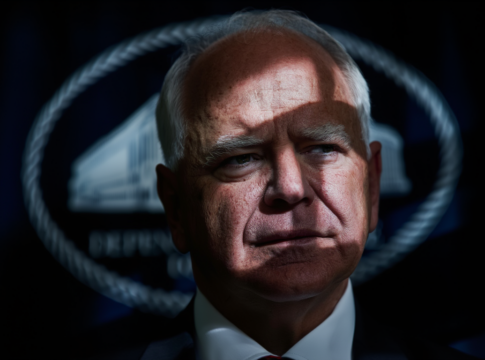
The Department of Justice has escalated its investigation into alleged federal law enforcement obstruction by issuing grand jury subpoenas to multiple Minnesota government offices, marking a significant development in the ongoing conflict between federal immigration enforcement and local Democratic leadership.
According to sources familiar with the matter, FBI agents delivered subpoenas Tuesday to five Minnesota government entities, including the offices of Governor Tim Walz, Attorney General Keith Ellison, and Minneapolis Mayor Jacob Frey. The federal investigation centers on allegations of conspiracy to obstruct Immigration and Customs Enforcement operations within the state.
Investigation Targets High-Profile Democrats
The subpoenas represent the latest chapter in mounting tensions between the Trump administration’s immigration enforcement priorities and resistance from Democratic state and local officials. Federal prosecutors are specifically examining whether Minnesota’s top Democratic leaders crossed legal boundaries in their opposition to ICE activities.
Deputy Attorney General Todd Blanche indicated that the rhetoric and actions from Minnesota officials may constitute criminal behavior. His comments suggest the Justice Department views certain anti-ICE statements and policies as potentially violating federal statutes designed to protect law enforcement operations.
The investigation gained momentum following reports that federal prosecutors were examining the conduct of both Walz and Frey for allegedly interfering with federal immigration enforcement efforts. This scrutiny comes as the Trump administration has prioritized aggressive immigration enforcement nationwide.
Church Disruption Sparks Federal Response
The federal probe intensified following a controversial incident at Cities Church in St. Paul, where dozens of protesters allegedly disrupted Sunday worship services. The demonstrators reportedly stormed the sanctuary during active religious services, claiming the church’s pastor was a local ICE official.
The disruption prompted immediate condemnation from federal officials and triggered a separate civil rights investigation. Assistant Attorney General Harmeet Dhillon announced the Justice Department would examine potential federal civil rights violations related to the interference with religious worship and desecration of a house of worship.
This incident appears to have served as a catalyst for the broader investigation into whether state and local officials’ rhetoric contributed to an environment that encouraged such confrontations with federal law enforcement.
Officials Respond to Federal Pressure
Governor Walz responded forcefully to news of the investigation, characterizing it as part of a broader pattern of political weaponization by the current administration. His response indicates he views the federal probe as politically motivated rather than based on legitimate legal concerns.
Walz’s statement referenced other recent investigations involving Democratic officials, suggesting a coordinated effort to target political opponents. He also drew attention to what he described as the administration’s failure to investigate a federal agent involved in a shooting incident, contrasting this with the aggressive pursuit of state and local officials.
Minneapolis Mayor Frey similarly rejected the federal investigation’s legitimacy, framing it as an intimidation tactic designed to silence local opposition to federal immigration policies. His response suggests local Democratic leaders intend to maintain their resistance despite federal pressure.
For 8 months, Pam Bondi goes on Fox News and says: "No one is above the law, and people will be held accountable!" For 8 months, nothing! It's ridiculous!
Put up or shut up, we're tired of lip service! We want arrests! pic.twitter.com/XXCU62zavj
— Mike Engleman🇺🇲 (@RealHickory) January 21, 2026
Frey’s statement emphasized his commitment to protecting Minneapolis residents and local law enforcement while characterizing federal immigration operations as creating chaos and danger within the city. This response illustrates the fundamental disagreement between federal and local authorities over immigration enforcement approaches.
White House Escalates Rhetoric
The White House has responded aggressively to the Minnesota situation, with spokeswoman Abigail Jackson directly blaming state and local Democratic leaders for inciting the church disruption. Her comments represent a significant escalation in the administration’s rhetoric against Minnesota officials.
Jackson’s statement characterized the protesters as “radical leftists” and accused Walz and Frey of deliberately encouraging confrontational behavior. This language suggests the administration views the Minnesota situation as part of a broader pattern of Democratic resistance to federal immigration enforcement.
The White House response also indicates the administration intends to continue aggressive immigration enforcement despite local opposition, setting up potential for continued confrontations between federal agents and local communities.
Legal Implications and Precedent
The federal investigation raises significant questions about the boundaries between legitimate political opposition and criminal obstruction of federal law enforcement. Legal experts note that while elected officials have broad latitude to criticize federal policies, certain actions or statements could potentially cross into criminal territory.
The specific focus on whether officials’ rhetoric encouraged interference with ICE operations represents a novel application of federal obstruction statutes. This approach could establish important precedents for how federal prosecutors address conflicts between national immigration policy and local resistance.
The grand jury subpoenas suggest federal prosecutors believe they have sufficient evidence to warrant a formal criminal investigation. The scope of records and communications being sought will likely provide insight into the coordination between state and local officials in opposing federal immigration enforcement.
BREAKING: Multiple Minnesota officials served by the FBI with grand jury subpoenas for conspiring to impede ICE:
– Gov Tim Walz
– Attorney General Keith Ellison
– Minneapolis Mayor Jacob Frey
– St. Paul Mayor Kaohly Her
– Ramsey County Attorney John Choi
– Hennepin County… pic.twitter.com/MoIFw2H3v0— Libs of TikTok (@libsoftiktok) January 20, 2026
Broader Political Context
The Minnesota investigation occurs within the broader context of renewed immigration enforcement under the Trump administration. Federal officials have consistently emphasized their commitment to aggressive enforcement, while Democratic-led jurisdictions have implemented various forms of resistance.
This dynamic has created ongoing tension between federal authorities and local communities, particularly in areas with significant immigrant populations. The Minnesota case may serve as a test of how far federal prosecutors are willing to go in addressing local resistance to immigration enforcement.
The investigation also reflects the administration’s broader approach to federalism issues, where state and local governments have attempted to limit cooperation with federal immigration authorities. The outcome could influence similar conflicts in other Democratic-led jurisdictions nationwide.
Next Steps and Implications
The issuance of grand jury subpoenas indicates the federal investigation is entering a more serious phase, with prosecutors seeking detailed documentation of communications and decision-making processes. The scope and timeline of the investigation remain unclear, but the involvement of a grand jury suggests potential criminal charges could follow.
The Minnesota officials’ responses suggest they intend to fight the investigation both legally and politically, potentially setting up extended litigation over the scope of federal authority and local resistance. This confrontation could ultimately require resolution by federal courts or higher-level political negotiations.
The case will likely be closely watched by other state and local officials who have implemented similar policies opposing federal immigration enforcement, as the outcome could establish important precedents for future conflicts between federal and local authorities.