
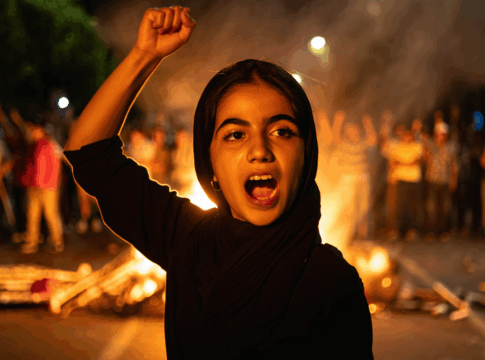
President Donald Trump issued stark warnings to Iran’s government Wednesday, threatening “very strong action” if the regime proceeds with executing anti-government demonstrators amid ongoing nationwide protests that have left thousands dead.
The escalating crisis has drawn international attention as human rights organizations report that Iranian authorities have killed more than 2,400 protesters in a violent crackdown spanning 180 cities across all 31 provinces. The unrest represents the most significant challenge to Iran’s clerical leadership since the 1979 Islamic Revolution.
Trump’s warning comes as the family of 26-year-old protester Erfan Soltani faces an agonizing wait. Soltani, detained last week during demonstrations, was reportedly scheduled for execution on Wednesday following what relatives described as an “extremely rapid” court process lasting just two days.
Swift Justice Raises International Alarm
The speed of Soltani’s case has shocked human rights advocates familiar with Iran’s judicial system. Awyar Shekhi, a representative from the Hengaw Organization for Human Rights, told international media outlets that his organization had “never witnessed a case move so quickly.”
Soltani’s sister, a lawyer by profession, attempted to intervene legally in her brother’s case but was told by Iranian authorities that there was nothing to pursue. The family has been denied all contact with Soltani since his arrest, despite Iranian law typically allowing condemned prisoners final moments with loved ones.
“The Iranian government is trying to control the population, to not allow any more protests to happen,” Shekhi explained, characterizing Soltani’s detention as part of a broader intimidation campaign.
Trump Weighs Military Response
Speaking to CBS News, Trump delivered an unambiguous message to Tehran’s leadership regarding potential executions: “If they hang them, you’re going to see some things… We will take very strong action if they do such a thing.”
The president indicated he planned to attend a White House meeting Tuesday evening to discuss Iran policy and obtain “accurate numbers” on the protest death toll. “The killing looks like it’s significant, but we don’t know yet for certain,” Trump told reporters. “Once we have the numbers, we’ll act accordingly.”
MAKE HIM FAMOUS! Erfan Soltani is scheduled to be executed by the Islamic Regime in Iran tomorrow (14th of January). We know Iran collapses under international pressure. Let's scream this out loud so Trump hears this. He will send help. Please share Erfan Soltani videos and news! pic.twitter.com/CU2pgujTj8
— Ryan Williams (@koreanscot) January 13, 2026
Trump has already implemented economic measures against Iran, announcing 25% tariffs on any nation conducting trade with the Islamic Republic. Administration sources suggest military and other options remain under consideration as the situation deteriorates.
Competing Death Toll Claims
The scale of casualties remains disputed between Iranian officials and international monitoring groups. The U.S.-based Human Rights Activists News Agency (HRANA) has confirmed 2,403 protester deaths, including 12 children, despite widespread internet blackouts hampering information flow.
An Iranian official speaking to Reuters acknowledged 2,000 deaths but blamed “terrorists” for the violence. The government has also suffered casualties, with HRANA reporting nearly 150 government-affiliated personnel killed during clashes.
State-controlled Fars News Agency reported Wednesday that Tehran held funerals for more than 100 security force members and others described as “martyrs,” highlighting the conflict’s intensity.
Social Media Diplomacy Intensifies
Trump has utilized his Truth Social platform to maintain pressure on the Iranian leadership while encouraging protesters. Tuesday’s post declared that Iranian authorities would “pay a big price” for the killings and urged demonstrators to “keep protesting.”
“I have cancelled all meetings with Iranian Officials until the senseless killing of protesters STOPS. HELP IS ON ITS WAY. MIGA!!!” Trump wrote, referencing the U.S.-based Iranian opposition slogan “Make Iran Great Again.”
MIGA !
@PahlaviReza @realDonaldTrump pic.twitter.com/bXf3wZxZZW
— גילה גמליאל – Gila Gamliel (@GilaGamliel) January 13, 2026
Iran Rejects U.S. Intervention
Iranian government officials have dismissed Trump’s threats as attempts to “manufacture a pretext for military intervention,” warning that “this playbook has failed before.” The response suggests Tehran remains defiant despite mounting international pressure and domestic unrest.
The Iranian government has implemented comprehensive internet shutdowns to limit protest coordination and prevent documentation of security force actions. This digital blackout has complicated efforts by human rights organizations to verify casualty figures and track developments in real time.
Economic Triggers Spark Political Uprising
The current wave of protests initially emerged from public anger over Iran’s collapsing currency and soaring cost of living. Economic hardships, exacerbated by international sanctions and domestic mismanagement, have created widespread frustration among ordinary Iranians.
However, the demonstrations quickly evolved beyond economic grievances into broader demands for political change. Protesters have called for fundamental reforms to Iran’s theocratic system, challenging the authority of Supreme Leader Ali Khamenei and the Revolutionary Guard.
The geographic scope of the unrest underscores its significance, with reports indicating active protests in urban centers and rural areas alike. This nationwide character distinguishes the current movement from previous, more localized demonstrations.
International Implications
The crisis presents Trump with a complex foreign policy challenge early in his presidency. Military intervention carries significant risks, including potential regional escalation and American casualties. However, failure to respond to mass killings could undermine U.S. credibility on human rights issues.
European allies have expressed concern about the Iranian crackdown while urging diplomatic solutions. The international community faces pressure to coordinate responses that support Iranian protesters without triggering broader conflict.
The situation also affects ongoing nuclear negotiations and regional security arrangements. Iran’s domestic instability complicates diplomatic engagement while potentially creating opportunities for policy changes if the current regime faces sustained pressure.
As the crisis unfolds, the fate of protesters like Erfan Soltani has become symbolic of broader tensions between Iranian authorities and their population. The international community watches closely as Trump weighs his response to what many observers consider a defining moment for Iran’s future political direction.