
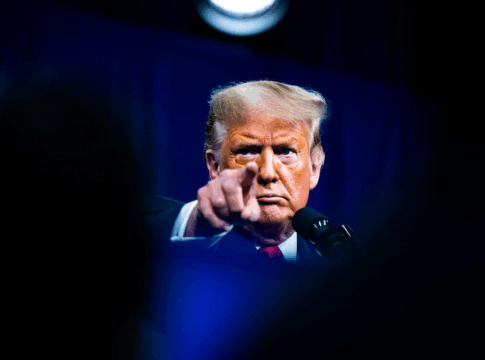
President Donald Trump made a forceful appeal to House Republicans this week, calling on party members to prioritize passage of federal voter identification requirements ahead of the 2026 midterm elections. Speaking at a GOP retreat at the Kennedy Center on Tuesday, Trump emphasized the urgency of advancing voter ID legislation as a cornerstone of the party’s electoral strategy.
The president’s remarks centered on reviving the SAVE Act, a comprehensive voter identification bill that cleared the House in 2025 but failed to advance through the Senate. The legislation would establish nationwide requirements for proof of citizenship when voting in federal elections, representing one of the most significant proposed changes to voting procedures in decades.
SAVE Act Returns to Political Spotlight
“You want to have Voter ID. You want to insist on it,” Trump told the assembled Republican lawmakers, according to reports from the closed-door session. The president indicated potential modifications to the bill’s branding, suggesting the “Save America Act” moniker might undergo revision to broaden its appeal.
The SAVE Act would require voters to present documentation proving U.S. citizenship before casting ballots in federal contests. Supporters argue the measure would strengthen election integrity by preventing non-citizens from participating in American elections, while critics contend it would create barriers that could disenfranchise eligible voters.
Republican lawmakers quickly rallied behind Trump’s call to action on social media platforms. Senator Mike Lee of Utah expressed enthusiastic support, declaring the legislation essential for protecting American democracy.
🚨 The SAVE Act has been on @LeaderJohnThune’s desk for over 9 MONTHS!
Tell John Thune to do his job and get it passed.
He’s tagged. pic.twitter.com/l36hF5kmHe
— Gunther Eagleman™ (@GuntherEagleman) January 13, 2026
Representative Byron Donalds of Florida echoed similar sentiments, emphasizing the bill’s core purpose of restricting voting access to U.S. citizens exclusively. The swift Republican response suggests coordinated messaging around the voter ID initiative as the party prepares for midterm campaigning.
Hi, Senator Thune.
I’ve visited your office, emailed your staff, & posted on social media for 12 days.
If you’re asking for money without passing the SAVE Act, you’re barking up the wrong tree.
Tomorrow is day 13 & I’ll be posting. pic.twitter.com/ucDLLMPqw0
— ThePersistence (@ScottPresler) January 13, 2026
Democratic Opposition Remains Firm
Democratic leaders have maintained consistent opposition to the SAVE Act since its initial introduction. Senate Minority Leader Chuck Schumer delivered a pointed rejection of the legislation in April 2025, characterizing it as fundamentally flawed and promising unified Democratic resistance.
“I will not let this noxious bill, the ‘SAVE Act,’ become law. Every single Senate Democrat, every single one of us, is united against it,” Schumer stated, highlighting the 60-vote threshold required for passage in the upper chamber.
Democratic critics argue the legislation represents a form of voter suppression that would disproportionately impact legitimate American voters who may lack immediate access to citizenship documentation. Civil rights organizations have similarly opposed such measures, citing concerns about barriers to electoral participation among minority communities and low-income populations.
California Becomes Focal Point of Debate
Trump specifically targeted California during his remarks, criticizing the state’s prohibition on local voter ID requirements. California enacted legislation preventing municipalities from implementing their own identification mandates, a policy that has drawn Republican ire.
“The only reason somebody doesn’t want that is because they want to cheat. Our elections are crooked as hell,” Trump declared, reprising familiar themes about election integrity that have defined much of his political messaging.
California Governor Gavin Newsom has repeatedly challenged such assertions, demanding evidence to support claims of widespread non-citizen voting. During a 2025 podcast appearance, Newsom questioned the factual basis for allegations of illegal voting by undocumented individuals.
“What substantive evidence is there to suggest that you have any receipts to back up that all of these people are voting illegally?” Newsom asked during his March podcast episode, highlighting the ongoing dispute over voting data and documentation.
Grassroots Initiative Challenges State Policy
Despite state-level resistance, a citizen-led initiative in California is gaining momentum toward placing a voter ID constitutional amendment on the November ballot. The measure would mandate identification and citizenship verification for all in-person voting, directly contradicting current state policy.
Organizers report approaching the signature threshold necessary to qualify the initiative for voter consideration. If successful, the amendment would represent a significant shift in California’s approach to election administration and could serve as a model for similar efforts nationwide.
The initiative’s progress demonstrates grassroots support for voter ID requirements even in states with Democratic leadership opposed to such measures. Political observers view the California effort as a potential indicator of broader public sentiment regarding election security protocols.
Midterm Stakes and Impeachment Warnings
Trump connected voter ID legislation to broader midterm election outcomes, warning Republican lawmakers that Democratic victories could lead to renewed impeachment efforts against his administration. The president framed the November contests as crucial for protecting his presidency from legislative challenges.
“You got to win the midterms. Cause if we don’t win the midterms, it’s just going to be, they’ll just find a reason to impeach me,” Trump told the Republican gathering, emphasizing the high stakes surrounding the upcoming elections.
Congressman Chip Roy says George Soros, Bill Gates and the United Nations are funding the takeover of our America through NGOs
He says if we don’t make sure only US Citizens are voting and only US Citizens are counted in the Census, it’s over
Pass the Save Act
“At the root of… pic.twitter.com/J1quSJNBes
— Wall Street Apes (@WallStreetApes) January 12, 2026
This messaging reflects Trump’s strategy of mobilizing Republican voters and lawmakers around both policy objectives and partisan concerns. By linking voter ID requirements to broader political survival, the president seeks to elevate the issue’s priority within the party’s legislative agenda.
National Implications for Election Laws
The renewed focus on federal voter ID requirements occurs amid ongoing debates about election administration across multiple states. Various jurisdictions have implemented different approaches to voter identification, creating a patchwork of requirements that the SAVE Act would standardize.
Proponents argue that national standards would eliminate confusion and ensure consistent application of citizenship verification procedures. Critics contend federal mandates would override state sovereignty in election administration and potentially disenfranchise eligible voters who face difficulties obtaining required documentation.
The legislative battle ahead will likely involve intense negotiations over implementation details, documentation requirements, and provisions for voters who lack immediate access to citizenship proof. Both parties appear positioned for a significant political confrontation over voting rights and election integrity as the midterm campaign intensifies.
With Republican unity behind Trump’s call and Democratic opposition remaining firm, the SAVE Act’s fate will depend largely on the outcome of November’s congressional elections and the resulting balance of power in both chambers of Congress.