
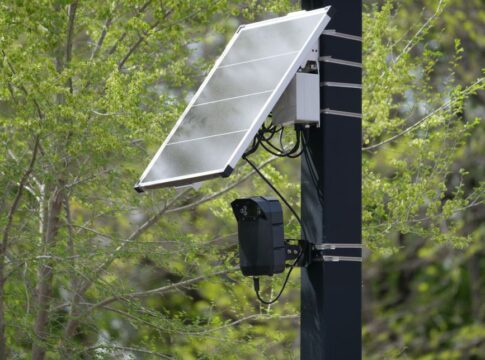
Americans are physically blocking automated license plate readers across the country as privacy concerns escalate over law enforcement surveillance technology that tracks every movement without warrants or probable cause.
Citizens Take Direct Action Against Mass Surveillance
Brady O’Rourke walks to his neighborhood intersection in Crystal, Minnesota several times weekly carrying a roof rake with a bright yellow sign attached. He uses it to block a Flock camera that records every vehicle passing through his street. The automated license plate reader sends data to police about who travels where and when. O’Rourke refuses to accept taxpayer-funded surveillance in his community, inspired by similar protests spreading nationwide.
More than 5,000 law enforcement agencies now use Flock Safety cameras, contributing to over 130,000 AI-powered license plate readers on American streets. These systems capture billions of license plates monthly along with vehicle details including make, model, color and modifications. Police can track where any driver has been at any time without obtaining warrants.
Constitutional Questions and Police Abuse
Clare Garvie, deputy director at New York University’s Policing Project, warns the technology enables law enforcement to monitor Americans going to work, doctor appointments, and dropping children at daycare. The indiscriminate data collection raises Fourth Amendment concerns about unreasonable searches. Police have already misused the technology to stalk former partners and assist immigration enforcement without local government consent. A Texas sheriff’s office tracked a woman who may have sought an abortion.
The ACLU’s Jay Stanley explains these AI systems attempt to reduce massive amounts of data to identify potential suspects, sweeping up enormous numbers of innocent people. A 2024 California police analysis found Flock misread license plates in 71 percent of alerts sent to officers, raising accuracy concerns alongside constitutional questions.
What This Means
While police chiefs argue the cameras help locate stolen vehicles and deter car theft, Americans increasingly reject living under constant surveillance funded by their own tax dollars. The debate centers on fundamental constitutional protections against government intrusion into daily life. As one protester stated, America’s system restricts law enforcement from getting into citizens’ business as they go about their daily lives, not the reverse.