
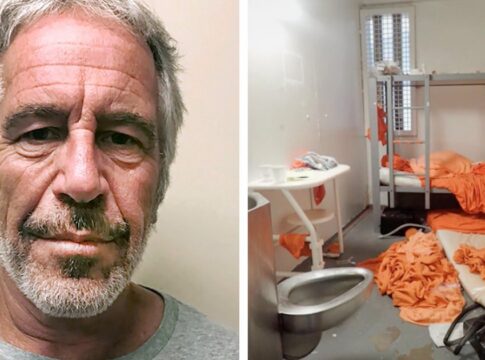
A leading forensics expert’s analysis of Jeffrey Epstein’s death challenges the official suicide ruling, claiming autopsy evidence points to a physical assault rather than self-inflicted hanging. The findings, presented in London this week, reveal critical inconsistencies overlooked by New York’s medical examiner in 2019.
Expert Identifies Key Contradictions
Professor Freeman, working with forensic specialists from Sweden and bias researchers, examined autopsy records, photographs, and created biomedical reconstructions of Epstein’s death scene. His analysis, conducted using files provided by Epstein’s brother, identified injury patterns inconsistent with suicidal hanging. Freeman found two distinct ligature marks on Epstein’s neck, positioned at different angles—a physical impossibility in standard hanging cases where both marks would angle upward toward a single anchor point.
The medical examiner’s report described the injury pattern as sloped or peaked, typical of hanging deaths. Freeman contests this characterization, stating the photographic evidence shows something entirely different. The second, lower mark on Epstein’s neck cannot be explained by conventional hanging mechanics, he argues, even considering scenarios involving multiple loops or false starts.



Prison Guard Testimony Raises Questions
The investigation’s credibility suffered when corrections officers falsified records and lied about their activities before Epstein’s death. Michael Thomas, the guard who discovered Epstein’s body, only agreed to cooperate with investigators two years later after facing criminal charges himself. None of the on-duty guards spoke with medical examiner investigators during the initial autopsy period, according to Justice Department records. Thomas later claimed he found Epstein hanging from a bedpost, a detail Freeman incorporated into his reconstruction despite its delayed disclosure.
Medical Examiner Stands By Original Findings
The New York City Office of Chief Medical Examiner declined interview requests and refused to address Freeman’s specific findings when contacted. A spokesperson issued a brief statement declaring the office stands by its suicide determination. Freeman attempted to publish his findings in an academic journal, but reviewers rejected the submission, stating it was inappropriate to criticize a medical examiner’s conclusions in peer-reviewed publications. Freeman plans to resubmit his research. His analysis suggests Epstein’s injuries, including a broken hyoid bone and thyroid cartilage, resulted from a physical struggle or assault rather than self-inflicted hanging.
What This Means
This expert challenge to the official narrative surrounding one of America’s most notorious criminals raises serious questions about investigative thoroughness and institutional accountability. The combination of uncooperative prison staff, falsified records, and now disputed medical findings demands renewed scrutiny of how authorities handled this high-profile death investigation and whether the American public received truthful answers about Epstein’s final hours.