
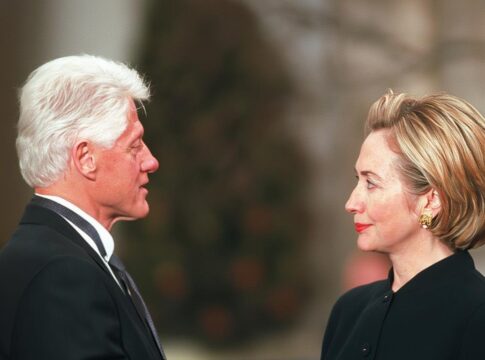
Former President Bill Clinton and former Secretary of State Hillary Clinton have refused to comply with congressional subpoenas requiring their testimony in a House investigation into the government’s handling of the Jeffrey Epstein case, setting up a high-stakes confrontation with Republican lawmakers.
House Oversight Committee Chairman James Comer announced Tuesday that he will pursue contempt of Congress charges against Bill Clinton after the former president failed to appear for his scheduled testimony. The move escalates a months-long investigation that has become increasingly politicized as it intersects with broader partisan battles in Washington.
Legal Challenge to Congressional Authority
In a strongly worded response filed Monday, attorneys representing both Clintons argued that the subpoenas exceed Congress’s investigative authority and violate constitutional principles governing the separation of powers. The legal team characterized the demands as politically motivated harassment rather than legitimate legislative inquiry.
“The subpoenas are invalid and legally unenforceable, untethered to a valid legislative purpose,” the Clinton legal team wrote in their formal response to the committee. They further argued that the investigation lacks merit because it fails to seek information relevant to potential legislative remedies.
The attorneys specifically cited Supreme Court precedent establishing limits on congressional investigative power, arguing that the Epstein probe exceeds those constitutional boundaries. They suggested the entire effort represents an abuse of congressional authority designed to generate political headlines rather than advance legitimate oversight functions.
Bipartisan Support for Investigation
Chairman Comer pushed back against characterizations of the investigation as purely partisan, emphasizing that Democrats on the oversight committee supported issuing the subpoenas. The Kentucky Republican stressed that the inquiry focuses on government accountability rather than personal accusations against the former president.
“This subpoena was voted on in a bipartisan manner by this committee,” Comer told reporters at the Capitol. “No one’s accusing Bill Clinton of anything, any wrongdoing. We just have questions, and that’s why the Democrats voted along with Republicans to subpoena Bill Clinton.”
The investigation stems from longstanding questions about how federal agencies handled the Epstein case, particularly after the disgraced financier’s death in federal custody in 2019 while awaiting trial on sex trafficking charges. The probe gained momentum following the Justice Department’s decision last July to formally close the Epstein matter, a move that sparked controversy across party lines.
The Clintons would rather risk prison for 12 months, than testify about their relationship with Epstein.
And it’s been all crickets from the Dems/MSM and the anti-Trumpers.
Why? Because they don’t actually care about the victims or justice. They just wanted to “get” Trump.
If… pic.twitter.com/b98AzTj2YD
— Clandestine (@WarClandestine) January 14, 2026
Clinton-Epstein Connections Under Scrutiny
The congressional interest in Bill Clinton’s testimony relates to his documented association with Epstein during the late 1990s and early 2000s, before the financier’s 2008 guilty plea to state charges involving solicitation of prostitution and solicitation involving a minor in Florida.
Flight records and other documents have shown Clinton traveled on Epstein’s private aircraft multiple times and participated in charitable events organized by the financier. However, no evidence has emerged linking Clinton to Epstein’s criminal activities, and survivors of Epstein’s abuse have not made accusations against the former president.
Clinton has previously denied any knowledge of Epstein’s illegal conduct and has distanced himself from the financier following the emergence of criminal charges. The former president’s representatives have characterized their client’s interactions with Epstein as limited business and charitable encounters that occurred before any public awareness of criminal behavior.
Broader Political Context
The Clintons’ response extends beyond legal arguments to include sharp criticism of the current political climate and Republican priorities. Their statement connects the Epstein investigation to broader concerns about the direction of federal policy under the current administration.
The former first family specifically criticized recent immigration enforcement actions, including a controversial incident in Minnesota involving an ICE agent, and expressed opposition to presidential pardons issued to individuals convicted in connection with the January 6, 2021, Capitol riot.
JUST IN – Bill and Hillary Clinton refuse to testify in the House’s Jeffrey Epstein investigation — NYT pic.twitter.com/XkjCFjFwJ2
— Disclose.tv (@disclosetv) January 13, 2026
“Bringing the Republicans’ cruel agenda to a standstill while you work harder to pass a contempt charge against us than you have done on your investigation this past year would be our contribution to fighting the madness,” the Clintons wrote in their statement.
Investigation’s Limited Scope Questioned
The Clintons also challenged the committee’s investigative methodology, noting that lawmakers have conducted only two formal interviews despite issuing multiple subpoenas to former high-ranking officials. The investigation has heard testimony from former Labor Secretary Alexander Acosta and former Attorney General William Barr, both of whom played roles in federal oversight during periods relevant to the Epstein case.
Seven other former government officials received subpoenas but have not been interviewed, according to the Clinton statement. This selective approach, they argue, undermines the investigation’s credibility and suggests political rather than substantive motivations.
Democratic committee member spokesperson Sara Guerrero acknowledged the importance of congressional cooperation while suggesting continued dialogue with Clinton’s representatives. “Cooperating with Congress is important and the committee should continue working with President Clinton’s team to obtain any information that might be relevant to our investigation,” she said.
Constitutional Showdown Ahead
The contempt proceedings against Bill Clinton will likely trigger a broader constitutional debate about the extent of congressional investigative authority, particularly regarding former presidents and their families. Legal experts anticipate the case could establish important precedents for future congressional oversight efforts.
The House must vote on any contempt citation before referring the matter to the Justice Department for potential prosecution. However, the department’s willingness to pursue charges against a former president remains uncertain, particularly given the complex legal and political considerations involved.
This confrontation occurs against the backdrop of increased congressional scrutiny of the Epstein case, including bipartisan legislation passed last year requiring the release of all government files related to the investigation. The document release requirement reflects widespread public interest in understanding how federal agencies handled one of the most high-profile criminal cases of recent decades.
As the contempt proceedings move forward, the case will test both the limits of congressional power and the willingness of former presidents to submit to legislative oversight. The outcome could influence how future investigations proceed and establish new boundaries for post-presidency accountability measures.
The DOJ should pursue Arrest Warrants for Both of them. If necessary they should be forced to comply with the Congressional Inquiry.