
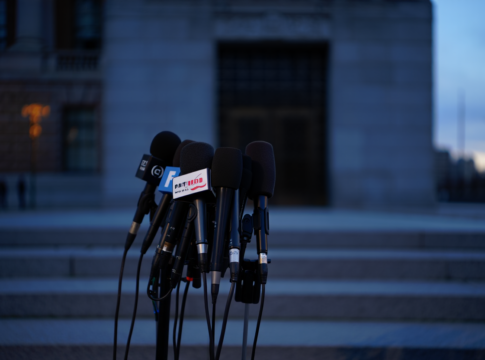
A Texas judge has ordered sweeping media restrictions on an upcoming murder trial, limiting courthouse access to just nine reporters while banning all cameras, recording devices, and livestreams in a case previously characterized by the defendant’s family spokesperson as a fight against white supremacy.
Strict Courtroom Controls Take Effect
Judge Angela Roach of the 296th District Court signed the order Friday, establishing unprecedented limitations for the trial set to begin June 1. The restrictions permit only nine credentialed reporters inside the courtroom, prohibit all recording equipment including cameras and audio devices, and ban livestreaming of any kind. The Collin County Sheriff’s Office will enforce the order, with violations potentially resulting in removal from the courthouse, credential revocation, or contempt of court charges.
Judge Roach cited intense public interest and the Supreme Court precedent from Sheppard v. Maxwell in justifying the restrictions. The 1966 decision addressed concerns that excessive media coverage could prejudice jury trials. The order represents one of the most restrictive media policies imposed on a criminal trial in recent Texas history, effectively creating a near-total information blackout during proceedings.
Self-Defense Claim In Fatal Stabbing
Karmelo Anthony faces first-degree murder charges for the April 2, 2025 stabbing death of a student-athlete at Kuykendall Stadium during a Frisco Independent School District track meet. According to authorities, the confrontation began when the victim, a Frisco Memorial High School student, asked Anthony to move from under a team tent. Anthony allegedly responded with the warning, “Touch me and see what happens,” before pulling a knife and stabbing the victim in the chest when physical contact occurred. Anthony, then 17 years old and attending Frisco Centennial High School, admitted to the stabbing at the scene but has maintained a self-defense claim.
Racial Framing And Public Statements
Following Anthony’s indictment last June, family spokesperson Dominique Alexander of the Next Generation Action Network publicly framed the case in racial terms. Alexander stated the trial represents “what it means to be Black in America, where even our self-defense is questioned, scrutinized, and politicized.” He characterized the prosecution as an example of white supremacy and vowed the organization would ensure Anthony receives a fair trial “free from lies, outside interference, and bigotry.” Anthony is being tried as an adult and faces a potential sentence of 5 to 99 years in prison if convicted of first-degree murder.