
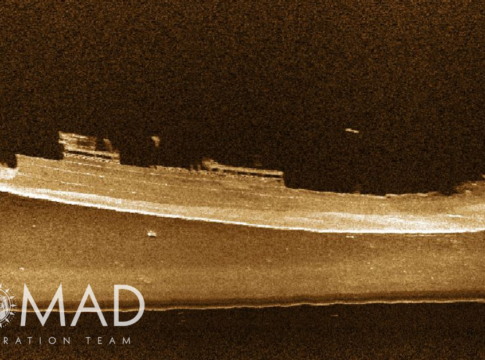
A German submarine that covertly dropped Nazi spies on American soil in 1944 has been linked to a merchant ship wreck finally discovered 400 feet beneath the ocean surface after 80 years of mystery.
The Deadly Mission
On November 29, 1944, German submarine U-1230 slipped through New England waters and deposited two Nazi agents near Hancock, Maine, with orders to gather intelligence against the United States during World War II. Just four days later, on December 3, the same U-boat commander Hans Hilbig spotted the SS Cornwallis, a 400-foot Canadian steamship carrying sugar and molasses from Barbados to New Brunswick. The torpedo struck near the bow, sinking the vessel in under 10 minutes.
Only six of the 48 people aboard reached life rafts. One died from hypothermia before rescue boats arrived, leaving five survivors who were transported to Rockland, Maine, by a U.S. Navy ship. The Cornwallis had been equipped with defensive weapons including a 4-inch gun and machine guns, but none were fired during the attack.


Discovery Ends Decades of Searching
The New Hampshire-based Nomad Exploration Team announced this week they located the wreckage in July using side scan sonar technology. Team member Danny Allan said the discovery required years of persistence, battling cold water, strong currents and remote locations. Subsequent dives confirmed the vessel’s identity nearly 400 feet below the surface. The 5,458-ton steam merchant ship, originally launched in 1921 as the Canadian Transporter, had survived one previous torpedo attack in 1942 near Barbados before being repaired and returned to service.
The Spy Mission Unraveled
The two German agents landed by U-1230, Erich Gimpel and American turncoat William Colepaugh, successfully traveled undetected from Maine to New York City. Colepaugh had traveled to Germany in 1944 for espionage training before his deployment. The mission collapsed when Colepaugh confessed to a friend who contacted the FBI. Both men were arrested, sentenced to death by military court, then had their sentences commuted to life imprisonment. The submarine U-1230 survived the war until being scuttled in 1945. American authorities launched investigations after the Cornwallis sinking to determine if enemy agents had infiltrated U.S. territory, eventually learning that residents had spotted strangers in Hancock around the time of the attack.