
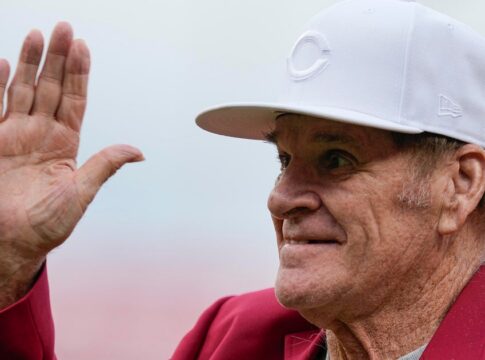
President Trump granted a complete pardon to Pete Rose, baseball’s all-time hits leader who died before regaining his place in the sport that banned him for gambling on games. The move delivers symbolic vindication to Rose’s legacy but leaves his Hall of Fame exclusion untouched, since presidential pardons hold no authority over baseball’s private institution.
Record-Breaking Career Ended by Betting Scandal
Rose accumulated 4,256 career hits during his two decades with the Cincinnati Reds and other teams, winning three World Series championships. He later managed the Reds while secretly placing bets on baseball games, including contests involving his own team. When investigators discovered his gambling activities in 1989, Rose accepted a lifetime ban from Major League Baseball rather than face formal charges. The ban automatically disqualified him from Hall of Fame consideration, despite his statistical dominance.
Rose served five months in federal prison in 1990 for tax evasion related to income from baseball card shows and memorabilia sales. He gained release in 1991, completing his debt to the criminal justice system decades before his death. The pardon clears his federal criminal record but cannot reverse baseball’s internal disciplinary actions, which operate independently of government authority.


Trump’s Long Campaign for Rose’s Redemption
Trump advocated for Rose’s reinstatement since before his first presidential term, writing on social media in late 2015 that Rose had paid his price and deserved recognition. At a recent White House event, Trump acknowledged Rose’s gambling violated baseball rules but argued the widespread legalization of sports betting changed the moral calculus. Trump emphasized that Rose bet on his own team to win, distinguishing his actions from throwing games or fixing outcomes.
What This Means
The pardon provides closure to Rose’s family and supporters who fought for his recognition, though it delivers more symbolic than practical benefits. Rose cannot gain Hall of Fame induction through presidential action, as the Hall operates as a private organization beyond federal jurisdiction. Baseball Commissioner Rob Manfred previously declined Rose’s reinstatement requests, and the pardon creates no obligation for reconsideration. Rose’s statistical achievements remain in record books, but his exclusion from Cooperstown continues despite federal forgiveness for his criminal conduct. The case highlights tensions between America’s pastime and the presidency over who controls baseball’s historical narrative.