
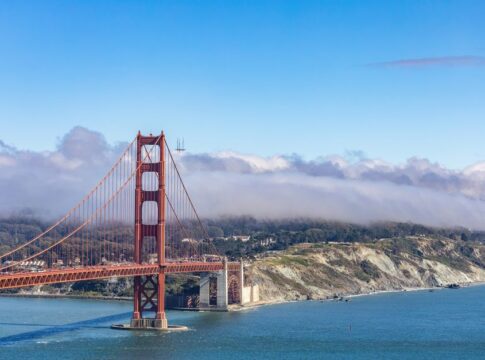
Seven activists who paralyzed San Francisco’s Golden Gate Bridge for four hours in 2024 face up to five years in county jail after a jury convicted them of multiple misdemeanor charges Thursday, though prosecutors failed to secure a felony conspiracy conviction that could have meant 15 years in state prison.
The April 2024 Protest and Arrests
On April 15, 2024, Bhavika Anandpura, River Allen, Rocky Chau, Sara Cantor, Conrad de Jesus, Sarah Ferrell, and Em Tillotson drove their vehicles onto the Golden Gate Bridge’s southbound lanes, stopped traffic, and chained themselves together to protest Israel’s military operations in Gaza. The demonstration trapped motorists on the bridge for four hours. Law enforcement arrested 26 protesters that day, later nicknamed the “Golden Gate 26” or “GG26.”
Most arrested protesters saw their charges dropped or reduced through plea agreements. Prosecutors moved forward with trials only for seven individuals where evidence appeared strongest. The jury convicted these defendants of false imprisonment, unlawful assembly, and obstruction of a thoroughfare. Cantor received an additional conviction for refusing to disperse, adding six months to her potential sentence.
Impact on Trapped Motorists
District Attorney Brooke Jenkins detailed the consequences for people trapped during the blockade. Surgeons and oncologists missed critical medical appointments with patients. One mother ran out of water needed to mix powdered formula for her infant during the extended delay. Multiple witnesses testified about their experiences stuck on the bridge, providing evidence prosecutors used to demonstrate harm caused by the protest action.
The jury deadlocked on the felony conspiracy charge, resulting in a mistrial on that count. A hearing scheduled for next week will determine whether prosecutors pursue a retrial. UCSF law professor David Levine expressed surprise at the hung jury, noting the coordinated nature of the protest suggested clear planning. “Everybody showed up at the same time, and they all were prepared to act all together,” Levine said, questioning what additional evidence conspiracy requires.
Sentencing Disparity Controversy
Defense attorneys criticized the prosecution as excessive, comparing the charges to punishment given protesters who blocked the San Francisco-Oakland Bay Bridge during the 2023 APEC Summit. Those demonstrators received only fines and five hours of community service. San Francisco deputy public defender Nuha Abusamra called seeking felony convictions for civil disobedience “egregious” and expressed disappointment with the misdemeanor convictions while noting jurors rejected the more serious felony charges.
Defense lawyer Katy Isa framed the case within America’s tradition of citizen activism against perceived injustice. The contrast between potential five-year jail sentences for the Golden Gate Bridge protesters and minimal penalties for similar Bay Bridge demonstrations raised questions about prosecutorial consistency in handling political demonstrations that disrupt major transportation infrastructure.
Sources
Cbsnews: Pro-Palestinian protesters who blocked Golden Gate Bridge convicted of misdemeanor charges