
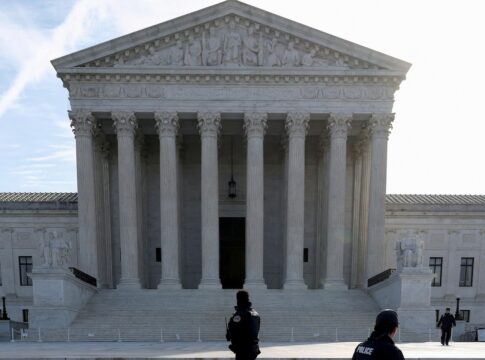
The Supreme Court unanimously struck down a $1.5 billion verdict against Cox Communications on Wednesday, delivering a major setback to the entertainment industry’s battle against online piracy and establishing new limits on when internet providers can be held liable for illegal downloads.
Court Sets New Standard for Provider Liability
Justice Clarence Thomas wrote for the court that Cox Communications, America’s third-largest broadband provider, cannot face liability simply for providing internet service to customers who pirate copyrighted content. The ruling requires proof that providers specifically intended their service to enable copyright infringement or tailored their service for illegal activity. Thomas emphasized that holding Cox liable merely for failing to terminate accounts would expand secondary copyright liability beyond established legal precedents.
Sony Music Entertainment had pursued the massive damages award, arguing that internet service providers should face consequences for knowingly allowing piracy on their networks. Copyright owners insisted that the threat of lawsuits creates necessary incentives for providers to suspend accounts suspected of illegal activity. The Motion Picture Association of America supported Sony’s position, claiming anyone who materially contributes to infringement should face contributory liability.
Entertainment Industry Counts Massive Losses
The stakes extend far beyond one lawsuit. Nearly 19 billion downloads of pirated movies and television shows occurred through peer-to-peer software in 2023 alone, according to Motion Picture Association data. The entertainment industry estimates these copyright violations cost the American economy more than $29 billion annually and eliminate hundreds of thousands of jobs. The court’s decision effectively removes one major enforcement tool the industry hoped to deploy against rampant online piracy.
Victory Protects Internet Access Nationwide
Cox had warned that upholding the damages could force bankruptcy and potentially eliminate internet access in some American communities. The victory preserves the current model where direct infringement remains criminal under federal law, but secondary liability by service providers faces stringent requirements. Justices Sonia Sotomayor and Ketanji Brown Jackson concurred with the judgment while suggesting the court imposed unnecessarily strict limits on liability, preferring a fault-based standard derived from common law precedents. The ruling marks a clear boundary between providing infrastructure and actively facilitating copyright theft.