
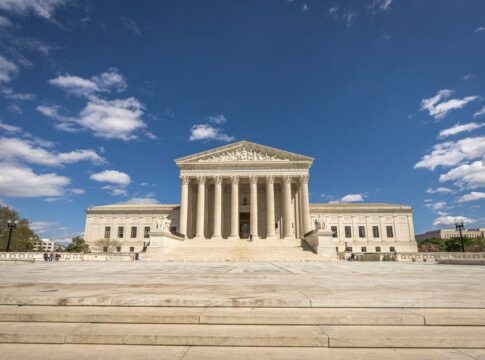
The Supreme Court delivered a decisive 6-3 ruling allowing the Trump administration to terminate Temporary Protected Status for more than 356,000 Haitian and Syrian migrants, overturning lower court decisions and clearing the path for potential deportations of individuals who have lived legally in America for years.
Court Backs Administration on TPS Termination
The ruling affects approximately 350,000 Haitian migrants and 6,100 Syrian migrants who received Temporary Protected Status after a devastating 2010 earthquake in Haiti and the Syrian civil war beginning in 2012. Justice Samuel Alito, writing for the majority, stated that federal law governing TPS clearly prevents courts from reviewing government decisions on these designations. The decision also rejected arguments that the administration’s actions constituted racial discrimination violating Fifth Amendment equal-protection rights.
James Percival, general counsel for the Department of Homeland Security, celebrated the decision on social media, emphasizing that TPS designations had become de facto amnesty programs. The ruling represents a significant victory for the Trump administration’s immigration enforcement priorities and establishes precedent affecting TPS holders from multiple countries beyond Haiti and Syria.
Sharp Dissent Claims Racial Motivation
The three liberal justices issued a fierce dissent challenging the majority’s conclusion. Justice Elena Kagan wrote that government statements regarding the termination decision contained clear racial undertones and overtones, arguing they practically shouted that race influenced the president’s resolve to remove Haitian migrants from the country. Her dissent referenced Trump’s 2024 presidential campaign, during which he amplified false claims about Haitian immigrants, including baseless rumors about pet abductions.
Jill Habig, CEO of Public Rights Project, warned that the decision puts hundreds of thousands of people at immediate risk. Her organization had filed legal briefs on behalf of 47 local governments urging preservation of TPS protections. She predicted severe community consequences including family separations, local economic damage, and forced returns to countries experiencing violence and humanitarian collapse.
Second Ruling Restricts Asylum Applications
In a separate 6-3 immigration decision released simultaneously, the Supreme Court ruled that migrants arriving at the border cannot apply for asylum until physically setting foot on American soil. Justice Alito again delivered the majority opinion, calling the case straightforward and noting that ordinary speech would not describe someone as arriving in a place before actually entering it. The Trump administration had argued that federal law’s requirement that migrants must arrive in the United States to apply for asylum excludes those stopped on the Mexican side of the border. This interpretation gives immigration authorities expanded powers to turn away asylum seekers before they reach American territory, representing another enforcement victory for the administration’s border security agenda.