
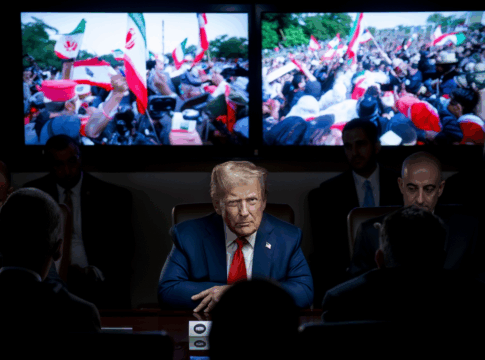
Iran is experiencing its most significant wave of civil unrest in years, with the death toll from ongoing protests now exceeding 500 people, according to human rights monitors. The demonstrations, which began over two weeks ago, have evolved from economic grievances into broader calls for regime change, presenting a serious challenge to the Islamic Republic’s authority.
The U.S.-based Human Rights Activist News Agency (HRANA) documented 490 civilian deaths and 48 security force casualties as of Sunday, while more than 10,670 individuals have been detained across the country. The scale and geographic spread of the protests, spanning over 100 municipalities, represents one of the most substantial challenges to Iran’s theocratic government in recent memory.
Economic Frustration Transforms Into Political Rebellion
What initially emerged as demonstrations against rising prices and economic hardship has rapidly transformed into a broader movement demanding fundamental political change. Protesters are now openly calling for an end to clerical rule, directly challenging the authority of Supreme Leader Ayatollah Ali Khamenei and the Islamic Republic’s governing structure.
LOVE IT! A Protester climbs the Iranian Embassy in London and replaces the Islamic Republic flag with the original flag of Iran instead.
Disclaimer: This act is a symbolic protest to raise awareness. It's important to avoid violence.#IranRevolution2026 #Iran #IranProtests… pic.twitter.com/TfMNyydnsz
— Bhavesh Gujrati (@Bhaveshlivelife) January 11, 2026
The economic triggers for the unrest reflect deeper structural problems within Iran’s economy, which has struggled under international sanctions and domestic mismanagement. Rising inflation, currency devaluation, and unemployment have created widespread frustration among ordinary Iranians, particularly younger demographics who see limited opportunities for economic advancement.
This evolution from economic protest to political uprising mirrors patterns seen in other regional movements, where initial grievances about living conditions expand into demands for systemic change. The Iranian government’s heavy-handed response appears to have further radicalized protesters rather than quelling dissent.
Government Response Intensifies
Iranian authorities have implemented increasingly severe measures to suppress the demonstrations, including a comprehensive internet shutdown imposed on Thursday. Despite these digital restrictions, limited reports and visual evidence continue to emerge, providing glimpses into the ongoing confrontations between protesters and security forces.
HRANA described the protest dynamics in Tehran as “scattered, short-lived, and fluid gatherings,” a tactical adaptation to the heavy security presence. The organization noted the deployment of surveillance drones and concentrated security force movements around potential demonstration sites, indicating systematic monitoring and control efforts.
Verified footage from The Associated Press captured thousands of demonstrators in Tehran’s Saadat Abad district on Friday, with participants chanting “Death to Ayatollah Ali Khamenei.” Additional video authenticated by Reuters showed large crowds marching and chanting Saturday, while BBC-verified content documented security forces opening fire on protesters in Tehran, Kermanshah province, and the Bushehr region.
Leadership Blames External Forces
President Masoud Pezeshkian has attributed the unrest to foreign interference, specifically accusing Israel and the United States of orchestrating destabilization efforts. In a state television appearance, Pezeshkian claimed Iran’s enemies had introduced “terrorists” into the country and urged families to prevent young people from joining what he characterized as violent groups.
“Families, I ask you: do not allow your young children to join rioters and terrorists who behead people and kill others,” Pezeshkian stated, employing rhetoric commonly used by Iranian officials to delegitimize domestic opposition movements.
This narrative of external manipulation serves multiple purposes for the Iranian government. It deflects attention from domestic grievances while justifying harsh security measures as necessary responses to foreign-backed terrorism rather than legitimate civil unrest.
Trump Administration Considers Response Options
The Iranian crisis has captured attention at the highest levels of the U.S. government, with multiple news outlets reporting that President Donald Trump received briefings on potential response options, including military action. Sources familiar with the briefings, speaking to The New York Times, CBS News, NBC News, and CNN, indicated that Trump has not made final decisions regarding U.S. involvement.
The consideration of military options reflects the complex strategic calculations surrounding Iranian unrest. While the U.S. has historically supported democratic movements abroad, direct military intervention carries significant risks, potentially uniting Iranians behind their government while escalating regional tensions.
Trump is scheduled for additional briefings on Tuesday, according to The Wall Street Journal, suggesting ongoing high-level deliberations about American policy toward the crisis. The administration faces pressure from various quarters to support Iranian protesters while avoiding actions that might backfire or destabilize the region further.
Regional Implications and Threats
Iranian Parliament Speaker Mohammad Baqer Qalibaf has escalated rhetoric regarding potential external intervention, warning that any attacks on Iran would trigger retaliation against Israeli and American targets. “Israel, as well as the United States’ bases and ships, will be our legitimate target,” Qalibaf declared, highlighting the regional dimensions of the crisis.
This threatening posture reflects Iran’s strategy of deterring foreign involvement through the threat of broader regional conflict. Given Iran’s network of proxy forces across the Middle East and its missile capabilities, such warnings carry substantial weight in regional security calculations.
Historical Context and Future Implications
The current unrest occurs against the backdrop of previous Iranian protest movements, including the 2019 demonstrations that resulted in hundreds of deaths and the 2009 Green Movement following disputed elections. Each episode has tested the regime’s resilience while revealing persistent sources of popular dissatisfaction.
The scale and duration of current protests suggest deeper structural problems within Iranian society that extend beyond immediate economic concerns. The explicit calls for regime change represent a significant escalation from previous movements that often focused on specific policies or leaders rather than the system itself.
The international community faces complex decisions about how to respond to Iranian developments. While supporting democratic aspirations aligns with stated Western values, the potential for regional destabilization and humanitarian catastrophe requires careful consideration of any intervention strategies.
The coming days will likely prove crucial in determining whether the Iranian government can reassert control through repression or whether the protest movement can maintain momentum despite severe security measures. The ultimate outcome will have significant implications not only for Iran’s 85 million citizens but also for regional stability and international security more broadly.
Iran is asking for trouble & sympathy!!! I wouldn’t push my President!!!