
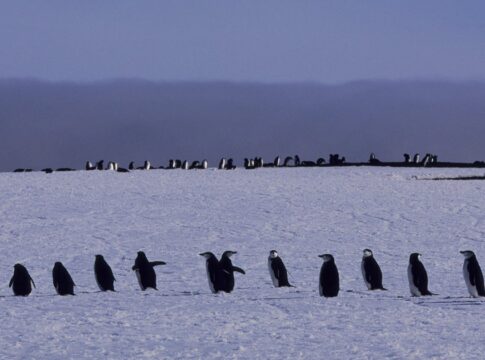
The world’s largest penguin colony has lost its title after a catastrophic 63% population crash wiped out more than 680,000 chinstrap penguins on a remote Antarctic island over 14 years, according to new research from the British Antarctic Survey.
Massive Population Decline Documented
Zavodovski Island, a volcanic outcrop near Antarctica, saw its chinstrap penguin population plummet from 1.09 million breeding individuals in January 2011 to just 402,000 in 2025. Drone and satellite imagery confirmed the dramatic collapse, which occurred at a steady rate of 7% annually. The island no longer holds the record for the world’s largest penguin colony, a distinction now belonging to the Adelie penguins of Cape Adare, which numbered over one million as of 2018.


Norman Ratcliffe, lead author of the study published in Current Biology, called the loss very rapid and alarming. The findings prompted researchers to recommend reclassifying chinstrap penguins from least concern to endangered status with the International Union for Conservation of Nature. The designation would mark a sharp downgrade for a species currently not considered threatened with extinction.
Krill Shortage Drives Collapse
Scientists ruled out a 2016 volcanic eruption as the primary culprit after determining the ash cloud from Mount Curry blew northeast over uninhabited areas. The population decline began before the eruption and continued at the same rate afterward. Instead, researchers linked the collapse to diminishing krill availability, the tiny shrimp-like creatures that form the chinstrap penguin’s primary food source. Warming ocean temperatures have pushed krill south toward colder waters that chinstrap penguins cannot tolerate well.
Meanwhile, macaroni penguins on the same island increased from 338,000 to 433,000 over the identical period, now outnumbering chinstraps. Macaroni penguins eat a wider variety of prey than chinstraps, and their population growth supports the conclusion that volcanic activity played no significant role. The study identified this shift as the most striking change in penguin community composition observed at any single Antarctic location to date.
What This Means
The research raises serious concerns about chinstrap populations across the South Sandwich Islands, which host 38% of the species worldwide. Scientists believe climate change operating through ocean food webs represents the main driver of the collapse. A climate-induced regime shift appears to have harmed maritime Antarctic chinstraps while benefiting subantarctic macaroni penguins. The findings underscore how warming waters and shifting ecosystems can rapidly devastate even remote wildlife populations previously thought stable.
Sources
Cbsnews: Iconic penguin colony sees population collapse driven by climate change, study finds