
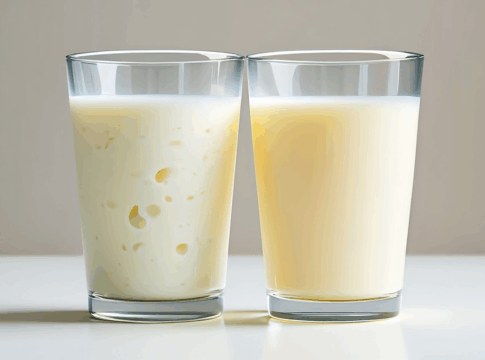
President Donald Trump put his signature on legislation Tuesday that fundamentally changes what millions of American students can drink with their school meals, marking his first bill signing of 2026 and delivering on campaign promises to roll back federal nutrition mandates.
The Whole Milk for Healthy Kids Act, which received unanimous approval from both chambers of Congress in late 2025, permits schools nationwide to serve full-fat and 2% milk options alongside the reduced-fat varieties that have been standard since 2012. The measure directly overturns restrictions implemented during the Obama administration as part of broader childhood obesity prevention efforts.
Make Whole Milk Great Again.🥛 pic.twitter.com/l14FZhZDgw
— The White House (@WhiteHouse) January 15, 2026
The Oval Office ceremony brought together an unusual coalition of dairy industry representatives, agricultural advocates, and lawmakers from both parties who had championed the legislation. Trump characterized the signing as a victory for common-sense nutrition policy and parental choice.
Kennedy’s Dietary Revolution Sets the Stage
The milk legislation follows closely on the heels of controversial new federal dietary guidelines released by Health and Human Services Secretary Robert F. Kennedy Jr. last week. Kennedy’s recommendations represent a dramatic departure from decades of federal nutrition policy, promoting full-fat dairy products and what the administration terms “healthy fats” while diminishing emphasis on traditional low-fat dietary approaches.
Kennedy’s announcement that the federal government was “ending the war on saturated fats” signaled a broader philosophical shift in how the Trump administration views nutrition science and federal dietary recommendations. The new guidelines flip conventional wisdom by placing full-fat dairy and protein sources at the foundation of recommended eating patterns.
Agriculture Secretary Brooke Rollins indicated that implementation would move swiftly, with whole and 2% milk expected to appear in school cafeterias within weeks of the law taking effect.
Whole Milk is back. 🥛
President Trump signs the Whole Milk for Healthy Kids Act, allowing schools participating in the National School Lunch Program to offer whole milk, expanding beverage choices for students and boosting production for dairy farmers. pic.twitter.com/uHEUuF59Sw
— The White House (@WhiteHouse) January 14, 2026
Scope and Impact on School Nutrition Programs
The legislation affects the National School Lunch Program, which serves approximately 30 million students across the United States daily. Of those students, roughly 21 million receive their meals at no cost or reduced prices, making school nutrition programs a critical component of food security for low-income families.
Under the new law, schools gain flexibility to offer whole milk, 2% milk, and nutritionally equivalent non-dairy alternatives while maintaining the option to serve reduced-fat and fat-free varieties. The expanded choices apply to both breakfast and lunch programs and include flavored milk options that had been restricted under previous guidelines.
The legislation also streamlines the process for accommodating students with dietary restrictions. Previously, parents needed written documentation from medical professionals to secure milk alternatives for children with disabilities affecting their dietary needs. The new law allows parental authorization alone for such accommodations.
Political Messaging and Implementation
White House spokeswoman Taylor Rogers framed the signing as part of Trump’s broader “Make America Healthy Again” initiative, criticizing the Obama-era policies as government overreach that deprived children of essential nutrients. The administration’s messaging emphasizes parental choice and local decision-making over federal mandates.
The Trump administration has launched a promotional campaign reminiscent of the iconic “Got Milk?” advertisements that dominated American media in the 1990s and early 2000s. The campaign features digitally altered images of Trump with a milk mustache, accompanied by messaging encouraging whole milk consumption.
RFK Jr. says an entire generation of children missed out on vital nutrients when whole milk was removed from schools.
“In 2012, the Obama administration… took whole milk out of our schools.”
“They allowed children to continue to drink skim milk, but skim milk tastes terrible… pic.twitter.com/BxjwhEzXiw
— MAHA Action (@MAHA_Action) January 14, 2026
Nutritional Science and Expert Perspectives
The policy shift reflects ongoing debates within nutrition science about the role of dietary fats in healthy eating patterns. Traditional federal guidelines have emphasized limiting saturated fat intake, leading to recommendations for reduced-fat dairy products as part of overall dietary strategies.
Whole milk contains higher concentrations of several nutrients, including protein, calcium, phosphorus, and vitamins A, B, and D. Full-fat dairy products also provide omega-3 fatty acids and tend to promote satiety more effectively than their reduced-fat counterparts, potentially helping students feel satisfied longer after meals.
However, nutrition experts note that full-fat dairy products can quickly contribute to the recommended daily limit of saturated fat intake, which the new federal guidelines maintain at 10% of total daily calories. The challenge for school nutrition programs will be balancing the benefits of full-fat dairy with overall dietary composition.
Reduced-fat milk options provide many of the same nutritional benefits while contributing less saturated fat to students’ daily intake, a consideration that remains relevant despite the policy changes.
Historical Context and Policy Evolution
The Healthy, Hunger-Free Kids Act of 2010, signed by President Obama, established the milk restrictions now being reversed. That legislation emerged during heightened national concern about childhood obesity rates and represented an effort to improve the nutritional quality of school meals through federal standards.
The Obama-era approach emphasized reducing calories, sodium, and saturated fat in school meals while increasing whole grains, fruits, and vegetables. The milk restrictions were one component of a comprehensive strategy to address what public health officials identified as an obesity epidemic among American children.
The unanimous congressional support for the current legislation suggests bipartisan recognition that nutrition policy requires periodic reevaluation as scientific understanding evolves and as practical implementation reveals challenges with existing approaches.
Industry and Agricultural Implications
Dairy farmers and milk producers have advocated for these changes, arguing that restrictions on whole milk sales to schools created artificial market limitations. The legislation potentially opens new revenue streams for dairy operations while providing schools with greater flexibility in meeting student preferences.
The law’s provision for organic and non-organic milk options acknowledges diverse consumer preferences and varying school district budgets. Schools can now tailor their milk offerings to local community preferences and economic considerations while maintaining compliance with federal nutrition programs.
Looking Forward
The milk legislation represents the first concrete policy implementation of the Trump administration’s revised approach to federal nutrition guidance. As schools begin incorporating whole and 2% milk options into their meal programs, education officials and nutrition experts will monitor impacts on student consumption patterns, satisfaction, and overall dietary quality.
The swift timeline for implementation suggested by Agriculture Secretary Rollins indicates the administration’s eagerness to demonstrate tangible policy changes early in Trump’s term. The success of this initiative may influence broader efforts to revise federal nutrition programs and dietary recommendations across government agencies.
What Trump needs to do is mandate physical education again in schools thru 12th grade. Most children never go outside and are not forced to participate in healthy activities. You want them to get in shape make them run and exercise. #FTW