
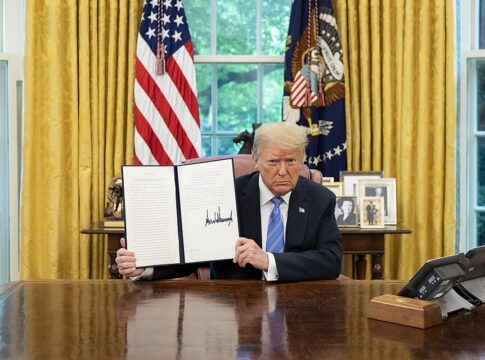
President Donald Trump signed an executive order Monday directing federal health agencies to promote spacing out childhood vaccines across multiple visits, contradicting decades of medical research and scientific consensus that firmly rejects any link between vaccines and autism.
Kennedy Leads Vaccine Policy Push
Health and Human Services Secretary Robert F. Kennedy Jr. stood alongside Trump during the Oval Office signing ceremony on August 10, 2026. The executive order advances Trump’s long-held theory about vaccine scheduling, which medical organizations across the country have consistently opposed. Kennedy, known for his vaccine skepticism, now holds authority over the nation’s health policy direction through his HHS position. National Institutes of Health Director Dr. Jay Bhattacharya also attended the signing event.
Trump displayed images from his Truth Social account during the meeting, emphasizing his administration’s position on childhood immunization schedules. The order represents a significant policy shift from established medical protocols that major pediatric and public health organizations have developed through extensive research and clinical practice.
Medical Community Stands Firm
Scientific consensus built on decades of studies has found no connection between childhood vaccines and autism spectrum disorders. The discredited theory linking vaccines to autism has been thoroughly examined and rejected by researchers worldwide. Current vaccine schedules were designed to provide optimal protection for children at the most vulnerable stages of development. Medical professionals warn that spacing out vaccines unnecessarily extends the period when children remain unprotected against serious, preventable diseases.
Constitutional And Public Health Questions
The executive order raises questions about federal authority over medical practice and parental choice in healthcare decisions. Supporters argue families should have more control over their children’s vaccination schedules without government-mandated timelines. Critics contend the order undermines established public health protocols that protect both individual children and community immunity. The directive could affect federal vaccine recommendations, though implementation details remain unclear. State health departments and private medical practices will face decisions about whether to follow revised federal guidance that contradicts professional medical associations.