
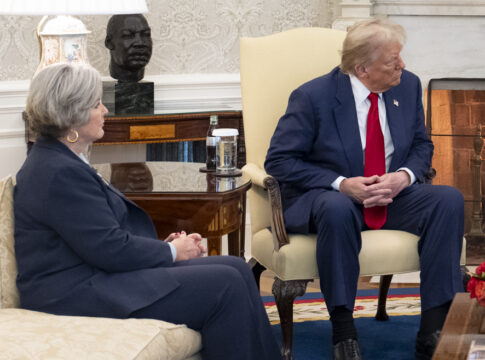
A federal judge has ordered Susie Wiles, President Donald Trump’s White House Chief of Staff, to surrender confidential records in an ongoing legal dispute, marking a significant confrontation between the executive branch and the federal judiciary over access to sensitive internal documents.
Court Demands White House Documents
The judicial order specifically targets records held by Wiles, who serves as Trump’s top White House enforcer and gatekeeper. The nature of the documents and the legal matter prompting the order remain central to the unfolding dispute. Wiles has earned a reputation as one of the most disciplined and powerful figures in Trump’s inner circle, controlling access to the President and managing White House operations with an iron grip.
Federal judges possess broad authority to compel document production during legal proceedings, even from high-ranking executive branch officials. The order places Wiles in a difficult position, balancing her duty to comply with judicial demands against her role protecting presidential prerogatives and sensitive White House communications. The timing of the order, issued on May 21, 2026, suggests the matter has reached a critical juncture requiring immediate action.
White House Power Structure Under Scrutiny
Wiles has operated as Trump’s most trusted advisor since his return to the White House, wielding extraordinary influence over policy decisions and personnel matters. Her role extends far beyond traditional Chief of Staff duties, functioning as both strategic counselor and institutional enforcer. The document demand potentially exposes internal White House deliberations and decision-making processes to external review, raising questions about executive privilege and the separation of powers.
Legal experts note that federal courts typically exercise caution when ordering senior White House officials to produce records, recognizing legitimate concerns about confidentiality and executive function. The judge’s decision to proceed with the order suggests either substantial legal justification or rejection of executive privilege claims that may have been asserted.
Constitutional Tensions Emerge
The order highlights ongoing tensions between judicial authority and executive power that have characterized multiple administrations. Presidents historically resist surrendering internal documents, citing executive privilege and the need for candid internal deliberations. Courts, however, maintain they possess authority to access evidence necessary for judicial proceedings, particularly in matters involving potential wrongdoing or constitutional questions. The confrontation between the federal bench and Trump’s top enforcer sets the stage for potential escalation, depending on how the White House responds to the judicial mandate.
Is nothing sacred anymore? If judges can compell the President to open confidential memos than every citizens correspondence is at risk of being open to the judiciary.