
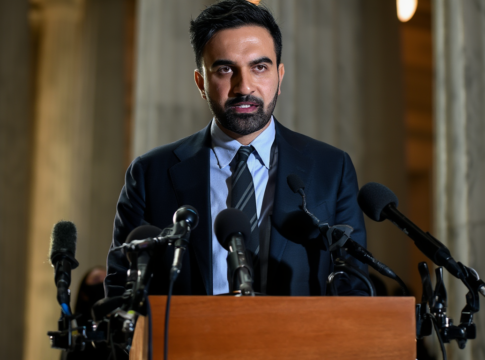
New York City Mayor Zohran Mamdani announced this week that the city’s universal childcare programs will extend coverage to all children under five, regardless of their immigration status or that of their parents. The policy represents a significant expansion of municipal services during a period of intensified federal immigration enforcement.
During a media briefing on Thursday, Mamdani emphasized that the programs will not inquire about immigration documentation. “All of those children are New Yorkers,” the socialist-Democrat mayor stated. “They should all be enrolled in pre-K and 3-K, no matter where they were born and where they come from.”
JUST IN: NYC Mayor Zohran Mamdani confirms undocumented children will be included in the city’s universal daycare program.
NYC is choosing “kids first,” even when the politics get ugly. pic.twitter.com/FC7NEeCu6w
— Brian Allen (@allenanalysis) January 24, 2026
Program Structure and Implementation
The universal childcare initiative will launch as a pilot program targeting children under two years old in neighborhoods identified as having the highest need. Unlike traditional assistance programs that consider household income and citizenship status, eligibility will be determined solely by residency within city limits and the child’s age.
The program encompasses existing pre-kindergarten and 3-K services while expanding to include younger children. City officials indicated that the rollout will occur in phases, with specific neighborhoods receiving priority based on demographic data and existing childcare infrastructure gaps.
Mamdani framed the policy as both an educational investment and an economic necessity for working families. By removing barriers to childcare access, the administration aims to enable parents to maintain employment while ensuring children receive early childhood education regardless of their family’s legal status.
Political and Financial Considerations
The announcement has generated debate over the use of municipal taxpayer funds to provide services to undocumented residents. Critics have raised questions about program costs, facility capacity, and the fairness of extending city-funded benefits to families without legal status.
City budget officials have not released detailed cost projections for the expanded program. The administration has indicated that long-term funding mechanisms and operational guidelines remain under development as the pilot phase proceeds.
We're at the point where a position held by George HW Bush is now a crazy socialist thing. https://t.co/b8ozX8Ju2X
— Everything Price Sufferer (but especially eggs) (@agraybee) January 25, 2026
Supporters argue that investing in early childhood education generates long-term economic benefits for the city, regardless of participants’ immigration status. Research has consistently shown that quality early childhood programs reduce future educational and social service costs while improving workforce development outcomes.
Timing Amid Federal Immigration Policies
Mamdani’s announcement comes as federal immigration enforcement has intensified nationwide. Recent incidents, including the brief detention of a five-year-old child in Minneapolis by Immigration and Customs Enforcement agents, have heightened concerns within immigrant communities about accessing government services.
The New York mayor addressed these concerns directly, stating that the city would “use every single law that we have here to protect the health and safety of everyone who signs up.” This language suggests the administration will invoke sanctuary city policies and state privacy protections to shield program participants from federal immigration enforcement.
The Trump administration has defended aggressive enforcement actions, with Vice President JD Vance arguing that ICE operations target individuals who have violated immigration laws. This federal stance creates a complex environment for local officials attempting to provide services to mixed-status families.
Broader Policy Vision
The childcare expansion represents part of a larger agenda Mamdani has developed in coordination with New York Governor Kathy Hochul. The mayor referenced plans to ensure “every New Yorker could afford a life of dignity and every family could afford to raise their kids.”
Might be controversial saying this but undocumented people are human beings who often have children who are human beings https://t.co/k7BVcotzAI
— evan loves worf (@esjesjesj) January 24, 2026
This collaborative approach between city and state leadership suggests potential for scaling successful pilot programs across New York. State-level support could provide additional funding mechanisms and legal protections that strengthen local initiatives.
Mamdani, who made history as New York’s first Muslim mayor when he took his oath on the Quran, has positioned his administration as a progressive alternative to traditional municipal governance. His socialist-Democrat platform emphasizes universal service provision and economic equity as core governmental responsibilities.
Implementation Challenges and Opportunities
City officials face several logistical challenges in implementing the expanded childcare program. Existing facilities may require capacity increases to accommodate additional enrollment. Staff hiring and training will need to scale appropriately, particularly for programs serving younger children who require more intensive supervision.
Language accessibility represents another operational consideration, as families from diverse linguistic backgrounds will need program information and services in multiple languages. The city’s existing multilingual infrastructure provides a foundation, but expanded programs may require additional translation and interpretation resources.
Documentation and enrollment procedures will require careful design to maintain the policy’s promise of not inquiring about immigration status while meeting administrative requirements. City agencies must balance program integrity with accessibility for vulnerable populations.
Community Response and Advocacy
Immigration advocacy organizations have generally praised the initiative as a model for inclusive municipal policy. These groups argue that providing services based on residency rather than legal status strengthens community stability and child welfare outcomes.
Childcare providers and early education professionals have expressed cautious optimism about expanded program funding while noting the need for adequate compensation and professional development resources. The success of universal programs often depends on maintaining service quality as enrollment increases.
Parent organizations in immigrant communities have welcomed the policy while emphasizing the importance of trust-building between families and city agencies. Historical experiences with government services have created wariness that officials must address through consistent outreach and transparent communication.
National Implications
New York’s approach may influence similar discussions in other major cities with significant immigrant populations. Municipal leaders across the country are navigating tensions between local service provision goals and federal immigration enforcement priorities.
The program’s outcomes will likely be scrutinized by policymakers, researchers, and advocacy groups as evidence for broader debates about immigration policy and social service access. Success metrics will include enrollment rates, educational outcomes, and community integration measures.
As the pilot program launches, its implementation will test the practical feasibility of providing universal services in a politically complex environment. The results may inform future policy decisions at both local and state levels regarding immigrant inclusion in public programs.
Moderate This
Completely expected. Elections have consequences.
New Yorkers voted him in!! So enjoy his policies!!
Trump needs to cut off any federal money going to New York.
Agree!
More money stolen from U.S. citizens.