
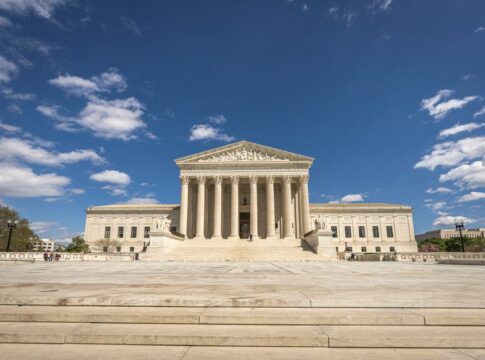
Supreme Court Justice Ketanji Brown Jackson publicly challenged her own court’s emergency docket process, questioning why certain parties receive expedited treatment while others wait months or years for decisions. Her remarks come as the Trump administration has achieved an 80% success rate on emergency applications since the start of the president’s second term.
Justice Questions Special Treatment
Speaking Thursday at the University of the District of Columbia’s law school, Jackson criticized what she called a two-tiered system of justice. The emergency docket allows parties to request immediate Supreme Court intervention in cases, sometimes receiving decisions within days or weeks rather than the typical months-long process involving full briefing schedules and oral arguments. Jackson warned this expedited process risks becoming an end run around standard review procedures.
The justice expressed concern about privileged litigants using the emergency docket selectively. Since the beginning of Trump’s second term, his administration has submitted 40 emergency applications to the Supreme Court, winning approximately four out of every five cases through this accelerated process. These victories have enabled mass firings of career employees, terminations of Democratic appointees, and cleared pathways for controversial deportations and immigration enforcement actions.
Constitutional Debate Intensifies
Attorney General Todd Blanche defended President Trump’s right to criticize Supreme Court decisions following a controversial mail-in voting ruling. Blanche emphasized that disagreeing with court decisions represents a natural part of American democracy, and the president maintains absolute authority to critique other government branches. This defense comes as tensions escalate over the emergency docket’s increasingly prominent role in major policy disputes.
Jackson argued that parties should prove impending harm requiring immediate action, rather than the court granting stays based solely on potential lower court errors. The Supreme Court’s majority has frequently split along ideological lines on emergency applications while providing minimal explanation for decisions, contrasting sharply with traditional final orders that include detailed reasoning and multiple opinions.
Broader Implications
The justice warned that significant real-world harms follow Supreme Court stay rulings when orders lack clear explanation. Jackson stated the public cannot maintain faith in the judicial system when the court consistently permits harmful acts without fully determining their lawfulness on the merits. The emergency docket has enabled the Trump administration to curtail nationwide injunctions and advance controversial policies while traditional cases remain pending in lower courts, fundamentally reshaping how major constitutional questions reach final resolution.