
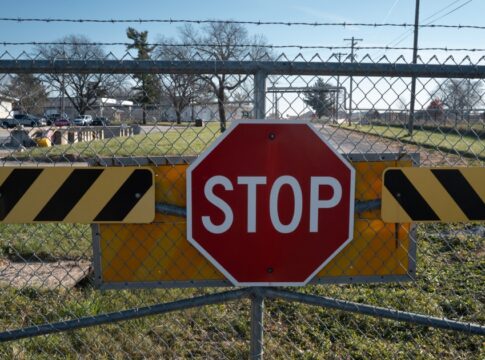
The U.S. Army plans to detonate 9,700 pounds of unstable lead azide explosives in southeast Iowa Wednesday morning, forcing evacuations and potentially spreading toxic dust across 100 miles despite fierce opposition from residents who say they received inadequate warning.
Controlled Blast or Dangerous Gamble
Military officials scheduled the detonation for 9 a.m. Central Time at the Iowa Army Ammunition Plant in Middletown, where 68 drums of deteriorating lead azide have begun recrystallizing and risk spontaneous explosion. Soldiers went door to door Tuesday afternoon notifying residents to evacuate. The Federal Emergency Management Agency is providing short-term hotel lodging through Friday for those in the evacuation zone, covering their Thanksgiving holiday displacement.
Army projections show Wednesday’s weather conditions could carry the lead dust cloud southwest into northeastern Missouri. Officials insist controlled detonation with mitigation measures presents less danger than an uncontrolled blast, though residents remain unconvinced. Lead is a potent neurotoxin with no safe exposure level, posing particular danger to children and causing learning disabilities, reproductive problems, mental health issues, and hearing loss.

At 10am ET tomorrow (Wed, 25 November 2026) the US Army plans to execute a controlled open detonation of 68 degraded drums (roughly 9,500 to 9,700 pounds) of lead azide at the Iowa Army Ammunition Plant near Middletown, Iowa. Normally submerged in a


Residents Scramble for Protection
Local families have rushed to change Thanksgiving plans, tape windows, cover gardens, and stockpile cleaning supplies. Jill Holler, whose family farm sits 20 miles west of Middletown, spent Sunday night collecting soil samples in darkness to compare future lead concentrations. The compressed timeline left many residents feeling blindsided by the sudden evacuation orders and health risks to their properties and livelihoods.
Outgoing Iowa Governor Kim Reynolds declared a disaster emergency for three affected counties Tuesday. She stated she takes the Army’s warning seriously that choosing between planned detonation and uncontrolled explosion represents an immediate danger requiring trust in military protection measures.
Mitigation Efforts and Cleanup Questions
Army officials constructed two stories of sand-filled barriers around the blast site and plan to spray water during detonation to capture particles. Additional measures include aqueous foam blocks, gel blocks, and two water walls made from 16,000-gallon tanks. Emergency permits submitted to the Environmental Protection Agency project a crater 38 feet wide and 5 feet deep.
Environmental monitoring teams will follow the plume’s path collecting soil, water, and surface samples to verify lead levels against baseline models. The Army promises to remove contaminated soil and clean surfaces at government expense if residential properties exceed 200 parts per million lead contamination. Officials have provided few specifics about testing timelines or remediation processes, leaving affected families uncertain about their future. Once deposited, lead particles remain in soil and surfaces permanently unless physically removed.
Sources
Nbcnews: Army to detonate cache of lead explosives Wednesday, sending toxic plume across Iowa