
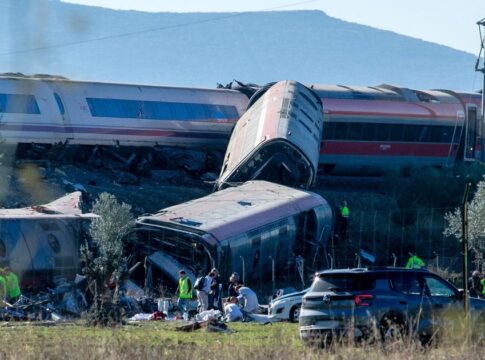
A catastrophic high-speed train collision in central Spain has claimed at least 64 lives after one train slammed into another that had stopped on the tracks, raising urgent questions about rail safety protocols that could impact American travelers and international transportation standards.
Deadly Crash Leaves Hundreds Affected
The collision occurred Wednesday morning in Toledo province when a Madrid-to-Seville high-speed train struck the rear of another train traveling the same route. The impact derailed two passenger cars, killing 64 people and injuring 80 others. Regional authorities in Castilla-La Mancha confirmed the rising death toll as emergency crews worked through the wreckage. Spain’s rail operator ADIF immediately suspended service between Madrid, Ciudad Real, and Andalusia, stranding thousands of travelers.
Transport Minister officials told state media that 397 passengers were aboard the RENFE state-owned train while 147 passengers rode the private IRYO train. The collision involved trains from both Spain’s government railroad and a private competitor, marking the second deadly incident between these operators in less than a year. Local mayor Manuel Galan reported that his town prepared emergency facilities to treat injured passengers as the scale of the disaster became clear.


Investigation Focuses on Safety Protocols
Authorities have not yet determined what caused one high-speed train to strike another that had stopped on active tracks. The incident raises serious concerns about signaling systems, communication protocols, and automatic braking technology that should prevent such rear-end collisions. Regional President Emiliano Garcia-Page rushed to the crash site as investigators began examining whether mechanical failure, human error, or system breakdowns allowed this preventable tragedy to occur.
Broader Implications for Rail Safety
This disaster highlights vulnerabilities in high-speed rail systems that governments worldwide continue expanding despite recurring safety incidents. American policymakers pushing for high-speed rail development should examine what failed in Spain’s system before committing taxpayer dollars to similar infrastructure. The involvement of both government and private rail operators in two deadly crashes within months suggests regulatory oversight problems that transcend ownership structures. For American families traveling internationally, this tragedy underscores the importance of understanding foreign transportation safety records before booking trips abroad.