
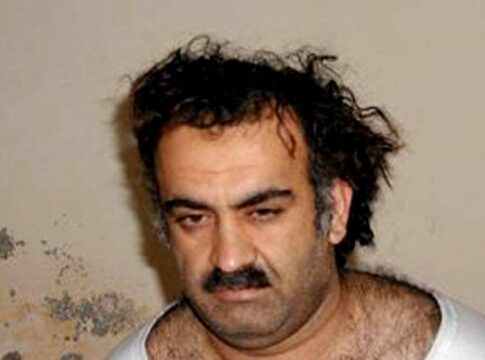
The Supreme Court declined to hear an appeal from Khalid Sheikh Mohammed, the alleged mastermind of the September 11 terrorist attacks, leaving in place the government’s withdrawal of plea agreements that would have spared him and two co-conspirators from potential death sentences.
High Court Refuses Guantanamo Case
The justices rejected Mohammed’s challenge without comment, allowing Defense Secretary Lloyd Austin’s decision to stand. Austin had revoked plea deals negotiated by military prosecutors that would have exchanged guilty pleas for life sentences instead of capital punishment. Justice Brett Kavanaugh recused himself from reviewing the appeal, though the court provided no explanation for his decision not to participate in the matter.
Mohammed faces charges alongside Walid bin Attash and Mustafa al-Hawsawi for their alleged roles in planning and executing the attacks that killed nearly 3,000 Americans. All three defendants confront five capital charges before a military commission at Guantanamo Bay. The D.C. Circuit Court of Appeals previously ruled that Austin acted within his legal authority when he withdrew the agreements, stating the court would not second-guess his judgment on national security matters.


Two Decades of Legal Delays
The three accused terrorists were captured in 2003 and formally charged in 2008, yet their cases remain unresolved more than twenty years later. The central legal obstacle involves whether evidence obtained during CIA interrogations can be used against them in court. Before their transfer to Guantanamo Bay in 2006, the defendants were held at secret CIA facilities where they endured what the government termed enhanced interrogation techniques, which critics characterized as torture.
The lengthy pretrial proceedings have frustrated families of September 11 victims seeking justice and closure. Military prosecutors had negotiated the plea deals to avoid further delays and secure guilty pleas, but Austin reversed that decision after political backlash from lawmakers and victim advocacy groups who demanded the possibility of death sentences remain available.
What This Means
With the Supreme Court’s refusal to intervene, the cases will proceed toward potential death penalty trials at Guantanamo Bay. However, the unresolved questions about interrogation evidence continue to complicate prosecution efforts, suggesting years of additional litigation lie ahead before any final resolution emerges for the deadliest terrorist attack on American soil.
Sources
Cbsnews: Supreme Court turns away appeal from alleged 9/11 mastermind Khalid Sheikh Mohammed