
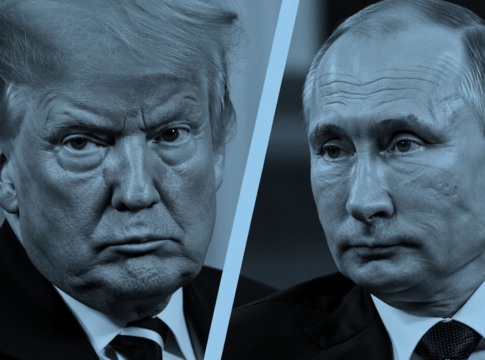
President Donald Trump confirmed Monday that he has invited Russian President Vladimir Putin to participate in a newly proposed “Board of Peace” designed to oversee Gaza’s reconstruction and temporarily manage the territory as part of efforts to end the Israel-Hamas conflict.
The invitation represents a significant diplomatic gambit by the Trump administration, extending an olive branch to Moscow despite Russia’s continued military operations in Ukraine, now in its fourth year. The Kremlin acknowledged receiving the proposal but has not yet indicated whether Putin will accept the role.
Ambitious 20-Point Peace Framework Takes Shape
The Board of Peace forms a central component of Trump’s comprehensive 20-point strategy to resolve the ongoing Middle East crisis. Under the current proposal, the board would assume temporary administrative control over Gaza while coordinating international reconstruction efforts in the war-torn territory.
Trump, who would serve as the board’s chairman according to White House officials, has been actively recruiting world leaders to join the initiative. However, the invitation process has already encountered diplomatic friction, with French President Emmanuel Macron declining participation.
In response to Macron’s rejection, Trump threatened to impose 200% tariffs on French wine and champagne imports, demonstrating the administration’s willingness to use economic leverage to advance its diplomatic objectives.
“He’ll join, but he doesn’t have to join,” Trump told reporters in Florida when discussing Macron’s decision.
Mixed International Response to Peace Initiative
The global reaction to Trump’s board proposal has been decidedly mixed, reflecting the complex geopolitical considerations at play. Belarusian leader Alexander Lukashenko, a close Putin ally, announced Tuesday that he had already signed documentation accepting his invitation to participate.
Meanwhile, British Prime Minister Keir Starmer’s office expressed concern about the potential inclusion of both Putin and Lukashenko, with Downing Street indicating the UK is consulting with allies before making a final decision on participation.
Morocco’s King Mohammed VI and Hungarian Prime Minister Viktor Orban have accepted positions on the board, providing Trump with some early diplomatic victories. However, the absence of Palestinian representation on the senior leadership boards has drawn attention from international observers.
Financial Commitments and Board Structure
According to multiple reports, the Trump administration is requesting $1 billion in contributions from participating nations, though official confirmation of this requirement remains pending. The substantial financial commitment may explain some countries’ hesitation to immediately embrace the initiative.
The White House has outlined a complex organizational structure featuring multiple boards with distinct responsibilities. The “Gaza Executive Board” would handle day-to-day operations within the territory, while a separate “Founding Executive Board” would focus on high-level investment coordination and diplomatic initiatives.
Trump has selected several prominent figures for key roles, including former British Prime Minister Tony Blair, Secretary of State Marco Rubio, and his son-in-law, Jared Kushner, for the founding board. The inclusion of family members has already sparked questions about potential conflicts of interest.
Diplomatic Tensions and Economic Pressure
The Trump administration’s approach to building international support has relied heavily on both incentives and pressure tactics. The threatened tariffs against France illustrate the president’s willingness to link trade policy with foreign policy objectives.
French officials pushed back against the economic threats, with sources close to Macron describing the tariff warnings as “unacceptable and ineffective.” However, the French president has offered an alternative engagement, proposing to organize a Group of Seven meeting that would include Russian participation.
Trump’s "Board of Peace" logo is basically the UN logo, except dipped in gold and edited so the world only includes America. pic.twitter.com/8XaHk2MmWj
— Adam Schwarz (@AdamJSchwarz) January 22, 2026
In a message shared by Trump on his Truth Social platform, Macron suggested convening a G7 meeting after the World Economic Forum, stating, “I can invite the Ukrainians, the Danish, the Syrians, and the Russians in the margins. Let us have a dinner together in Paris on Thursday before you go back to the US.”
Israeli Concerns Over Consultation Process
Despite being the primary beneficiary of any Gaza peace initiative, Israel has voiced objections to the proposed board structure. Israeli officials have indicated they were not adequately consulted regarding the boards’ functions and composition, raising questions about coordination between Washington and its key Middle East ally.
The Israeli concerns highlight potential challenges in implementing Trump’s vision, particularly given the complex security and political dynamics surrounding Gaza’s administration.
Timeline for Implementation
Reports suggest Trump intends to formalize the Board of Peace through a special ceremony at the World Economic Forum in Davos, Switzerland, later this week. The high-profile venue would provide significant international attention for the initiative while potentially pressuring reluctant world leaders to participate.
The ambitious timeline reflects Trump’s preference for rapid diplomatic action, though the complexity of the Gaza situation and the diverse international interests involved may require more extended negotiations.
Broader Implications for Global Diplomacy
Trump’s invitation to Putin represents a notable departure from the diplomatic isolation Moscow has faced from many Western nations since the Ukraine conflict began. The move signals the Trump administration’s willingness to compartmentalize different international crises while pursuing specific regional objectives.
However, the approach has generated concern among traditional allies who view Russian participation as potentially legitimizing Moscow’s broader international conduct. The tension between pragmatic peace-making and principled diplomatic positions will likely continue to complicate the board’s formation.
As the Davos meetings approach, international attention will focus on which leaders ultimately choose to participate in Trump’s ambitious Gaza peace initiative and whether the president can successfully navigate the complex diplomatic landscape he has created.