
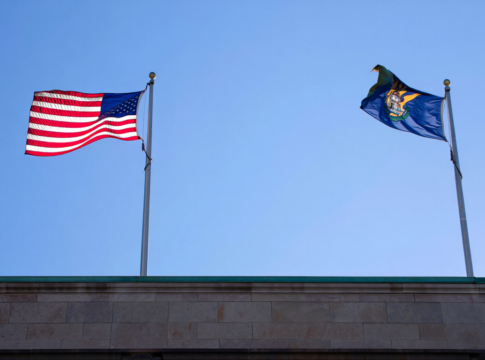
Boise Mayor Lauren McLean removed the rainbow Pride flag from City Hall on March 31, 2026, after Idaho Governor Brad Little signed legislation imposing $2,000 daily fines per unauthorized flag displayed on government property. The Democratic mayor had attempted to circumvent state law by designating the LGBT banner as Boise’s official city flag, but new enforcement provisions ended her workaround.
State Law Closes Local Government Loopholes
Idaho passed House Bill 96 in 2025, restricting flags on government property to the American flag, the Idaho state flag, and approved banners like POW/MIA and military flags. When cities like Boise tried declaring Pride flags as official municipal symbols to bypass restrictions, legislators responded with House Bill 561. The cleanup legislation closed loopholes and established financial penalties for non-compliance. Governor Little signed the measure privately at 11:44 a.m. on March 31, giving municipalities clear notice that creative workarounds would no longer shield them from enforcement.
McLean announced the flag’s removal in a statement criticizing the state legislature. She wrote that HB 561 was designed specifically to prevent Boise from flying the Pride banner, which had been displayed on city property for over a decade with community support. The mayor emphasized that financial penalties would burden taxpayers rather than city officials, forcing her decision to comply with state law despite her opposition to the restrictions.
Mayor Declares Values Unchanged Despite Compliance
Shortly after Governor Little’s signature, city workers removed the Pride flag around noon while a small crowd gathered to witness the moment. Video footage showed onlookers treating the removal with solemnity, singing songs in support of the banner’s symbolism. McLean stated clearly that while the flag came down, Boise’s values remained unchanged and would not be defined by state legislative actions.
What This Means for Local Governance
The confrontation between Boise and the Idaho legislature highlights tensions between progressive cities and conservative state governments over symbolic displays on public property. The $2,000 daily fine structure creates financial pressure that makes defiance prohibitively expensive for municipalities dependent on taxpayer funding. Idaho joins other states establishing uniform standards for government flag displays, limiting local officials’ discretion to showcase political or social causes on public buildings. The legislation demonstrates how state authority over local governments can override city councils and mayors when lawmakers determine that uniform standards serve broader public interests in maintaining neutrality on government property.