
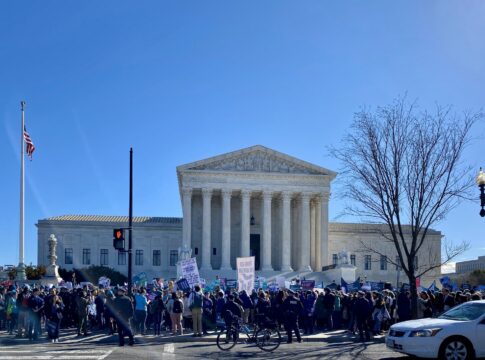
The Supreme Court delivered a decisive victory for Republicans on Monday, overturning a lower court decision that blocked Texas from implementing its redrawn congressional district map ahead of the 2026 midterm elections.
Court Rejects Racial Gerrymandering Claims
The high court’s 6-3 ruling struck down a three-judge panel in the Western District of Texas that had found race played too significant a role in the state’s redistricting effort. Texas Governor Greg Abbott requested Supreme Court intervention after the lower court ruled 2-1 that the state improperly packed Latino and Black voters into new districts. The Supreme Court based its order on precedent from Abbott v. League of United Latin American Citizens, with the three liberal justices dissenting.
The Supreme Court on Monday lifted a lower court injunction blocking Texas’ new congressional map, handing a victory to Republican-led state officials ahead of the 2026 midterm elections.https://t.co/FIkCrd4ZeM
— Badlands Media (@BadlandsMedia_) April 27, 2026
The Department of Justice supported Texas, arguing the redistricting was driven by partisan objectives rather than racial motivations that could violate the Voting Rights Act. The Supreme Court identified two critical errors in the lower court’s reasoning: failing to presume legislative good faith and not providing an alternative map meeting Texas’s political requirements. The justices also criticized interference with an active primary campaign that disrupted the federal-state balance in elections.
Liberal Justices Issue Sharp Dissent
Justice Elena Kagan authored a forceful dissent criticizing the conservative majority for its approach. She argued the decision guarantees Texas’s new map with enhanced partisan advantage will govern the 2026 House elections. Kagan stated many Texas citizens will be placed in electoral districts based on race without justification, calling this a constitutional violation. The court temporarily approved the map in December and finalized the decision Monday, keeping the new districts in place indefinitely.
Broader Redistricting Battle Continues
The ruling follows the Supreme Court’s approval of both Texas and California redistricting maps earlier this year. Texas and California led mid-cycle redistricting efforts spreading nationwide, with each state gaining five-seat advantages for their respective parties. The competing redistricting victories essentially neutralize each other’s impact on the 2026 midterm elections. House Minority Leader Hakeem Jeffries and Florida Governor Ron DeSantis continue exchanging sharp criticism over Florida’s pending redistricting battle, indicating these fights will remain contentious through the election cycle.