
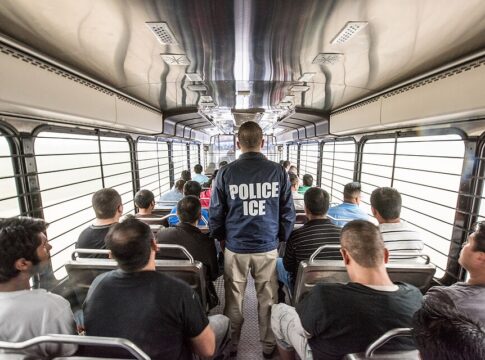
The First Circuit Court of Appeals has formally shut down the Trump administration’s practice of deporting illegal immigrants to third-party countries, issuing a mandate that halts removals to nations where migrants have no connection or prior warning.
Court Strikes Down Deportation Practice
The appeals court issued its formal mandate on Wednesday, dissolving a previous stay that had allowed Immigration and Customs Enforcement to continue third-party deportations while litigation proceeded. The ruling enforces a September 18, 2026 judgment that endorsed lower court restrictions on the controversial removal practice. ICE had attempted to deport at least one migrant from Peru to Ghana just days before the mandate came down, arguing the court had not yet formally blocked the policy despite last week’s adverse ruling.
The Trump administration has relied on third-party country deportations to handle cases where migrants claim they face torture if returned to their home nations. Under this approach, ICE sends individuals to countries with no connection to them, often without advance notice of the destination. The practice became a key tool for executing removal orders when traditional deportation routes faced obstacles.
Due Process Concerns Drive Ruling
The First Circuit upheld a February 2026 decision from Judge Brian Murphy, appointed by former President Joe Biden, who found the deportation method violated migrants’ due process rights. Judge Seth Aframe, writing for the three-judge panel, argued that denying migrants meaningful opportunity to raise concerns about unfamiliar deportation destinations strips away critical legal protections. The court rejected the Department of Homeland Security’s interpretation that would have allowed removals to third countries without informing migrants where they were being sent.
Administration Pushes Back Against Judicial Interference
DHS Chief Counsel James Percival responded sharply to the court intervention, accusing a group of federal district judges of repeatedly blocking deportations and Temporary Protected Status rollbacks despite Supreme Court rulings. Percival characterized the judicial resistance as naked political activism rather than legitimate legal review. The criticism highlights growing tension between the executive branch’s immigration enforcement efforts and federal courts that have emerged as significant obstacles to administration policy. The conflict extends beyond this single ruling, representing a broader pattern of judicial challenges to Trump-era deportation initiatives across multiple court districts.
What This Means
The formal mandate creates immediate operational changes for ICE, which must now provide migrants with notice and opportunity to contest third-party deportations before removal. The ruling affects only the First Circuit’s jurisdiction, covering Maine, Massachusetts, New Hampshire, Puerto Rico, and Rhode Island, though similar challenges could spread to other circuits. The decision adds to mounting legal setbacks for administration immigration enforcement, potentially slowing deportation operations and forcing policy revisions to comply with due process requirements established by Biden-appointed judges.