
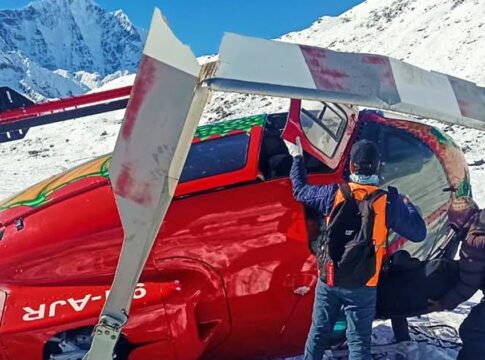
A deadly midair collision between two helicopters near Mount Everest’s base camp has claimed the life of a 47-year-old tourist from India and injured two others, exposing the dangerous realities of high-altitude emergency transport in one of the world’s most treacherous mountain regions.
Fatal Crash at High Altitude
The two helicopters collided Tuesday while attempting to land at Pheriche village, located at 13,780 feet above sea level, according to local administration officer Bhupendra Thapa. Both aircraft were evacuating trekkers from the Everest base camp route when the collision occurred. The crash killed an Indian national and injured a passenger from New Zealand, who was transported to Kathmandu for emergency treatment. A Nepali pilot also sustained injuries but received treatment locally.
Officials have not disclosed the total number of passengers aboard the two helicopters at the time of the collision. The accident happened during Nepal’s busiest trekking season, when thousands of adventurers attempt the challenging two-week journey to Everest base camp at 17,380 feet elevation.

Heavy Snow Creates Dangerous Conditions
The helicopters were ferrying trekkers after heavy snowfall had blocked the hiking route earlier in the week. Weather conditions improved Sunday, allowing thousands of stranded trekkers to resume movement. With no roads accessing the Everest region, helicopters remain the only viable option for evacuating sick or exhausted climbers suffering from the extreme cold and oxygen-depleted air at high altitude. The sole airstrip serving the area sits at Lukla, the traditional starting point for Everest base camp expeditions.
Trekking Season Draws Thousands Despite Risks
The fall season attracts massive numbers of international trekkers to Nepal, positioned between the end of monsoon rains and before harsh winter conditions make the route impassable. The timing creates a narrow window when weather conditions are theoretically safest, but the concentration of visitors during this period increases demand for helicopter evacuations. The accident underscores the inherent dangers of mountain rescue operations, where pilots must navigate unpredictable weather, thin air affecting aircraft performance, and limited landing zones at extreme elevations. Nepal’s mountaineering industry generates significant revenue but faces ongoing scrutiny over safety standards and emergency response capabilities in remote high-altitude areas where rescue options remain severely limited.